That rotten-egg smell in a hallway or bathroom is hydrogen sulfide, one of the gases inside every sewer system. Your plumbing is built to keep it out, so when you smell it, one of the barriers has failed. There are only a handful of common causes, and the most common one costs nothing to fix.
Start with a quick self-check
Answer these before calling anyone:
| Question | If yes, suspect |
|---|---|
| Has the house been empty for a week or more? | Dry traps |
| Is the smell strongest near one rarely used drain? | Dry trap at that drain |
| Does a toilet rock, even slightly, when you sit on it? | Failed wax ring |
| Does the smell come and go with wind or the AC? | Vent leak or open fitting |
| Are drains also slow, with damp soil outside? | Cracked drain line |
| Is the house on septic, and is the smell outside too? | Septic tank or its vent |
How your drains keep gas out
- Traps. Every sink, tub, shower and floor drain has a U-bend holding a few inches of water. That water is the seal.
- Vents. Pipes running up through the roof let air into the drain system so flowing water does not siphon the traps dry.
- Toilets have a trap built into the bowl, plus a wax ring sealing the base to the floor drain.
The causes, from most to least common
1. Dry traps: the free fix
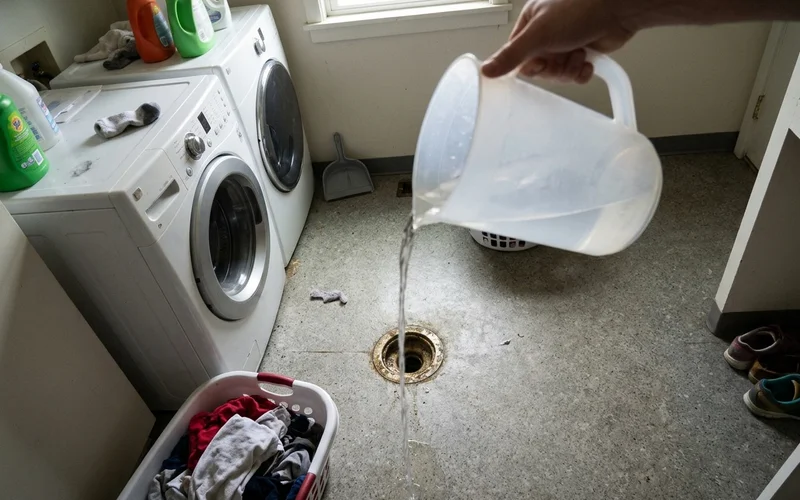
This is the leading cause in Lake Havasu City by far. Vacation homes, second homes and rentals between bookings sit closed through long hot stretches, and trap water simply evaporates. Guest baths, garage floor drains and laundry standpipes dry out even in occupied homes.
Try first: pour a quart or two of water into every drain you rarely use. For floor drains in a home you are about to close up, add a tablespoon of mineral oil on top to slow evaporation. Give it a day.
2. A failed toilet wax ring
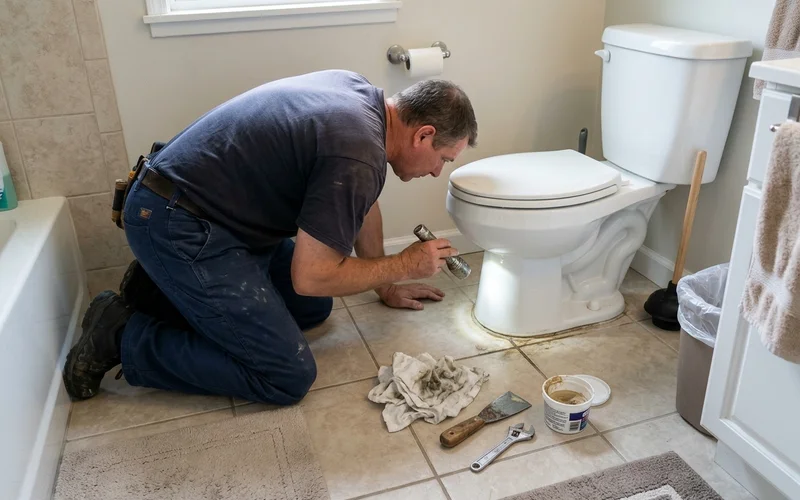
If a toilet moves at all, the seal underneath is probably broken. Gas, and often a slow leak, escapes at the floor line. Check every toilet.
3. A missing trap
This happens in newer construction more than people expect. A trap gets skipped during the build and an open drain vents into a room from day one. It shows up as a smell nobody can trace, with no leak in sight.
4. A vent leak
A poorly glued vent fitting or a hairline crack inside a wall lets gas into the cavity and then into the room. The smell often comes and goes with wind, air conditioning or doors opening and closing.
5. A cracked drain line
A cracked drain in a wall or under the slab can leak gas through the soil and into the house. If slow drains and damp soil are part of the picture, read broken sewer pipe under a slab.
6. Septic trouble
On a property still using septic, a full tank or a blocked septic vent can push odor back toward the house. Ask a plumber to confirm whether the smell is coming from the drain system or the tank.
A smell that comes and goes is still real
Intermittent odor usually means an opening that depends on air pressure: the AC starting, a door closing, wind across the roof vent. The opening is always there. Only the conditions change.
How smoke testing finds it
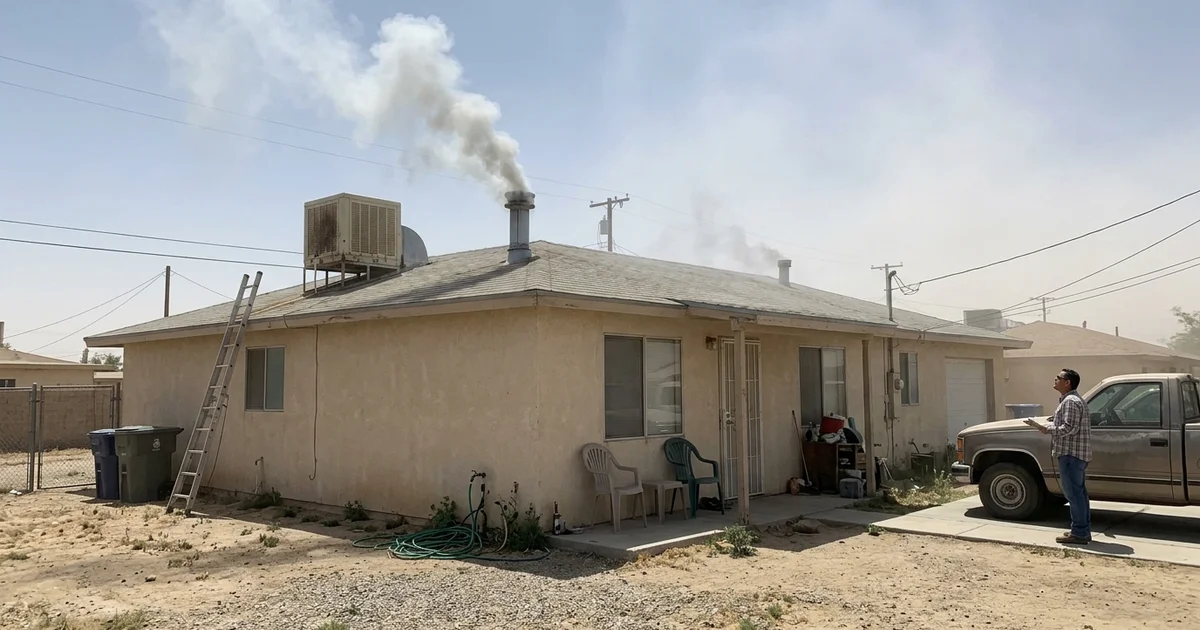
When refilling traps does not solve it, a smoke test usually does. Non-toxic fog is blown into the drain and vent system under low pressure. Fog rising from the roof vents shows the system is full. Fog appearing anywhere inside, such as around a toilet base, from a drain or through a wall gap, shows exactly where gas is getting in. It replaces guesswork and opening walls with a direct look.
Notes to have ready when you call
- Which rooms smell, and whether it is constant or on and off
- Whether it is worse in the morning, with the AC on or after showers
- Whether refilling the rarely used drains helped
- Whether any toilet moves
- How long the house sat empty, and whether it is on sewer or septic
Sewer gas diagnostics are part of our leak detection and sewer gas diagnostics service in Lake Havasu City. If the smell is strong or getting worse, open windows and call Lake Havasu Plumbing Pros at 928-555-0100. An automated bilingual assistant answers at any hour and routes your notes to a local plumber.