A toilet that runs all night, a faucet that drips no matter how hard you turn the handle, a disposal that hums and does nothing. These jobs sit on a list for months, and they usually get more expensive the longer they wait. A rocking toilet slowly rots the subfloor. A seized shutoff turns a simple faucet swap into a whole-house shutdown. A slow drip turns into a cartridge that will not close at all.
Fixture repair in Lake Havasu City has an extra factor most manufacturers never planned for: hard water that wears parts on a faster schedule. Lake Havasu Plumbing Pros can connect you with a local plumber who finds the part that failed, replaces it properly, and tells you plainly whether the water is likely to do it again.
Why Fixtures Here Wear Out Ahead of Schedule
Local water comes from wells in the Colorado River aquifer and carries a heavy mineral load. Calcium and magnesium act like a fine grit on every sealing surface in the house, and they leave a white crust on anything that stays wet. If you want to know how hard your water is, test it at the tap or check the city’s current water quality report.
The result shows up in homes of every age. Owners often find themselves on their second or third kitchen faucet within a few years and blame the brand, when the water is the real cause. Newer homes show it too, with cartridges sticking and shower heads losing flow sooner than expected. The parts pulled out of a fixture usually tell the story clearly, and you are welcome to look at them.
Toilet Trouble in Homes That Sit Empty
Toilets cause more quiet water loss than any other fixture, and that matters most in the many second homes and vacation rentals around Lake Havasu City.
- Running toilets. A worn flapper, a fill valve that will not shut off, or a pitted flush valve seat covers nearly all of them. In an empty house, a runner can go for weeks before anyone hears it. A rebuild fixes it if the tank and bowl are sound.
- Weak or incomplete flushes. Often scale clogging the rim holes and siphon jet, a partly closed supply stop, or a flapper closing too early.
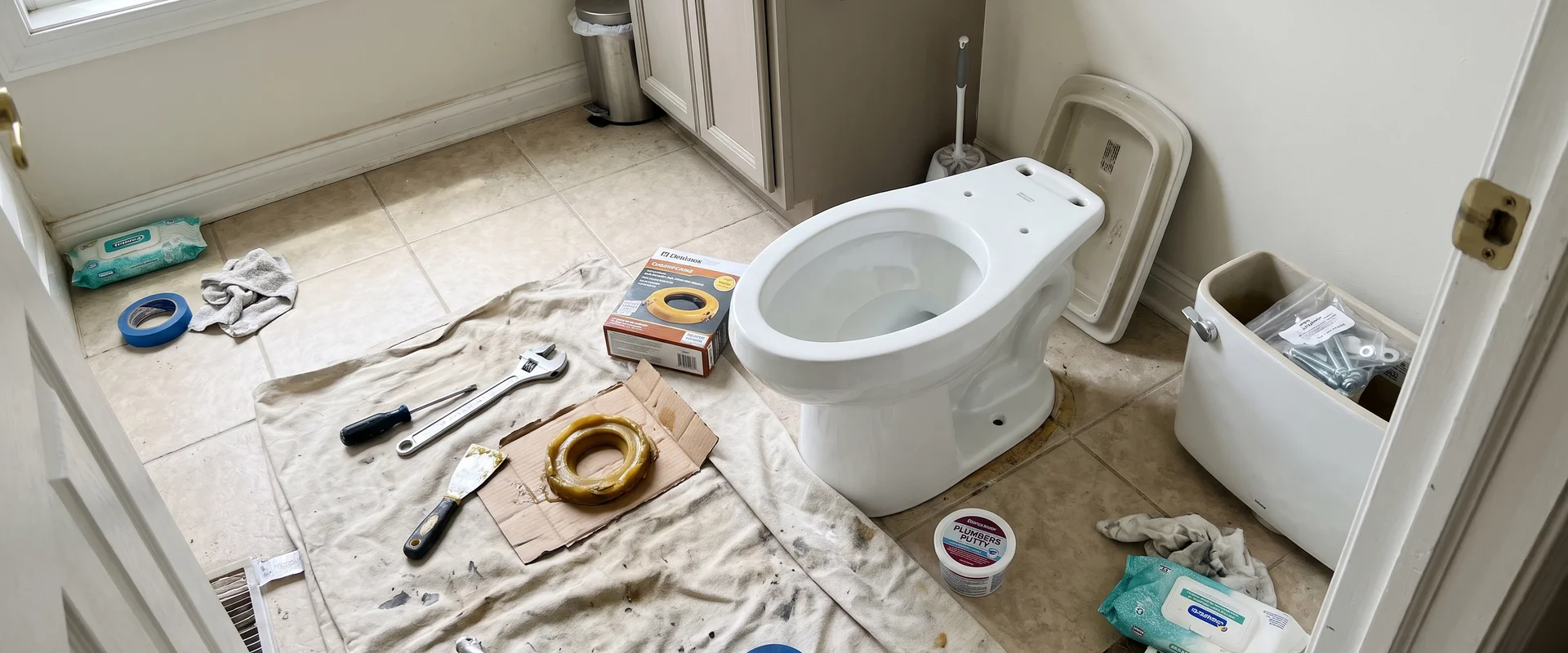
- Rocking or seeping at the base. Loose bolts or a low flange. The toilet gets pulled, the flange checked, a new wax ring set, and the bowl leveled so it stays sealed.
- Cracked porcelain. A hairline crack in a bowl or tank cannot be repaired. A new toilet gets fresh supply lines and a working shutoff.
Closing the supply stop behind each toilet before you leave a second home is a simple habit that prevents most of this.
Faucets and the Shutoffs Beneath Them
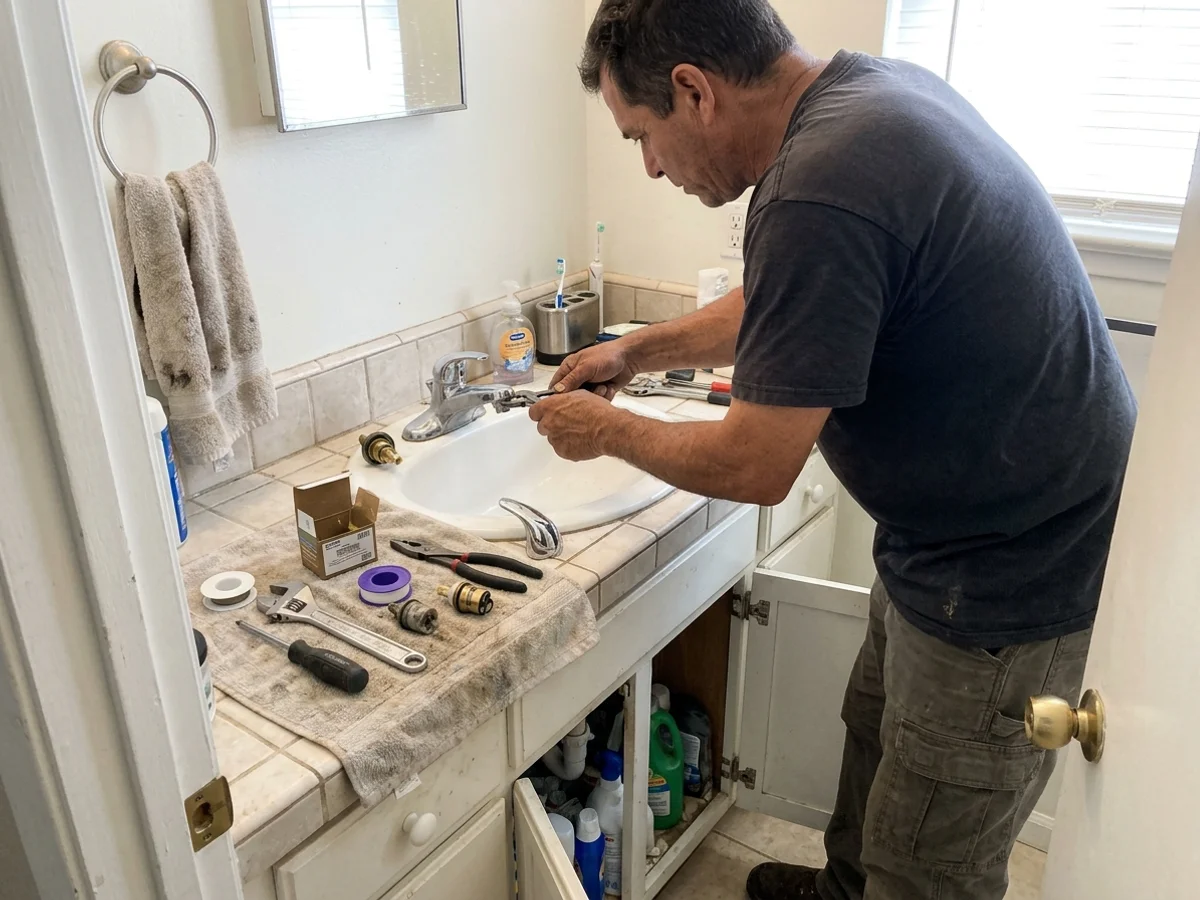
Most modern faucets use a ceramic disc cartridge or a seat and spring assembly. When scale builds on those surfaces they stop sealing cleanly, then start to grind, then stick. A drip from the spout or a handle that turns stiffly usually means the cartridge is going.
If the faucet body is solid and parts are available, a new cartridge or seats bring it back. Kitchen, bath, tub, shower, and utility faucets are all covered. The angle stops under the sink deserve attention during the same visit. In older homes they are often crusted shut, and a valve that will not close is a problem waiting for the worst possible moment. Replacing them while the faucet is apart is quick and sensible.
Disposal Problems and What They Mean
- Humming but not turning: A jam. With the power off, the hex socket underneath often frees it.
- Tripping the reset over and over: The motor is overheating or failing.
- Leaking at the sink flange or drain connection: A reseal or new gasket.
- Leaking from the bottom of the housing: The internal seal has failed and water has reached the motor. That is a replacement.
Repair the Part or Replace the Fixture
| What Failed | Usual Call | Reason |
|---|---|---|
| Flapper or fill valve | Rebuild | Tank is still sound and parts are simple |
| Cracked bowl or tank | Replace | Porcelain cracks cannot be fixed |
| Dripping faucet with a good body | Rebuild | A new cartridge restores the seal |
| Corroded base or discontinued faucet | Replace | Parts unavailable or body failing |
| Disposal leaking from the bottom | Replace | Internal seal failure |
| Seized angle stop | Replace | A valve that will not close is a flood risk |
Repairing the failed part comes first. Replacing a whole fixture because it is quicker than diagnosing one component is just an upsell. Request a free estimate and ask about any service call fee before booking.
A Handful of Jobs You Can Handle Yourself
- Swapping a toilet flapper.
- Unscrewing and soaking a scaled aerator or shower head.
- Freeing a jammed disposal with the hex socket, power off.
- Tightening a loose toilet seat.
Call a plumber for a shutoff valve that will not close, a toilet that rocks or seeps at the base, a faucet with a seized cartridge, a disposal leaking from the housing, or any new install where the supply lines are old. Forcing an old, scaled valve is the most common way a small DIY job turns into an emergency.
Getting Ready for a New Fixture Install
Bought a faucet, toilet, or disposal yourself? That is fine. A few checks help the visit go smoothly. Keep the box and the installation sheet. Measure the toilet rough-in, the distance from the wall to the center of the floor bolts, before buying. Check whether the faucet needs one hole or three in the sink deck. If the stops and supply lines under the sink are old or crusted, plan to replace them at the same time. If you are thinking about a softener, installing it before new fixtures gives those fixtures a longer life. Our fixture and hard-water guides cover the details.
Fixture repair and installation are available across Lake Havasu City, Desert Hills, Crystal Beach, the Parker Strip, and Topock, in English or Spanish.