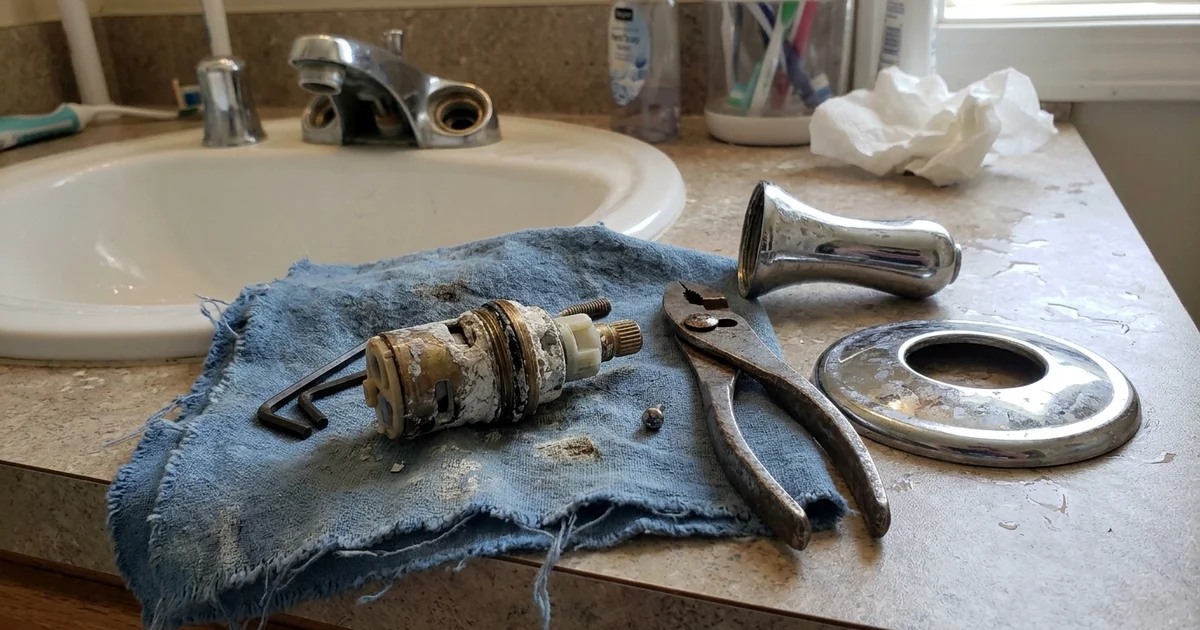
A dripping faucet looks like a small annoyance. In a Lake Havasu City home it is also a visible sample of what is happening throughout the plumbing. The minerals wearing down that cartridge are also building up in the water heater, the shutoff valves and every appliance that heats water.
Five quick definitions
Knowing the parts makes the rest of this guide easier.
| Part | Where it is | What it does |
|---|---|---|
| Cartridge | Inside most single-handle faucets | Two ceramic discs slide over each other to open and close the flow |
| Valve seat and washer | Inside older two-handle faucets | A rubber washer presses against a brass seat to stop water |
| Aerator | The screen at the tip of the spout | Shapes the stream and catches debris |
| Angle stop | Under sinks and behind toilets | Small shutoff valve for one fixture |
| O-rings | Around spouts and cartridges | Seal moving parts against leaks |
What hard water does to each
Cartridges. The seal depends on two polished ceramic surfaces staying perfectly smooth. Mineral particles get between them and act like fine sandpaper. The discs score, the seal leaks and the handle turns stiff or gritty.
Seats. When scale builds on a brass seat, the washer can no longer seal against a flat surface. You crank the handle harder and the drip keeps going.
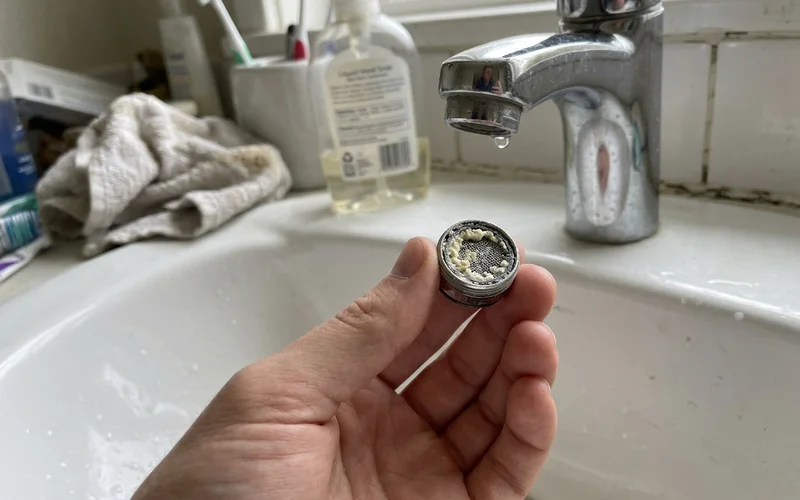
Aerators. Mineral flakes that break loose inside the pipes collect on the screen. The stream sputters or sprays sideways and the faucet feels weak. This is the easiest fix in the house.
Angle stops. They sit in the same water and almost never get turned, so they seize. Most owners find out when they try to close one during a leak.
Why it happens faster here
The water comes from wells in the Colorado River aquifer and carries a heavy mineral load. Faucet makers design parts and service intervals around average water, not water this hard. Two local details make it worse:
- The hot side fails first. Heat drives minerals out of solution faster, so the hot handle usually stiffens or drips before the cold one.
- Warm supply water most of the year. Through long summers well past 110 degrees, even the cold line runs warm, so scale keeps forming year round.
Lake Havasu City rentals see this sooner still, because a busy house runs far more water through its fixtures than a typical family.
It is probably not the brand
If you are on your second or third cartridge in a decent faucet, the brand is rarely the problem. Keep that in mind before replacing a fixture that only needs a rebuild.
Rebuild or replace
| Condition | Rebuild | Replace |
|---|---|---|
| Body and finish look good | Yes | |
| Parts available for the model | Yes | |
| Only symptom is a drip or stiff handle | Yes | |
| Body corroded or cracked | Yes | |
| Chrome pitting or flaking | Yes | |
| Model discontinued, no parts | Yes | |
| Already rebuilt two or more times | Yes |
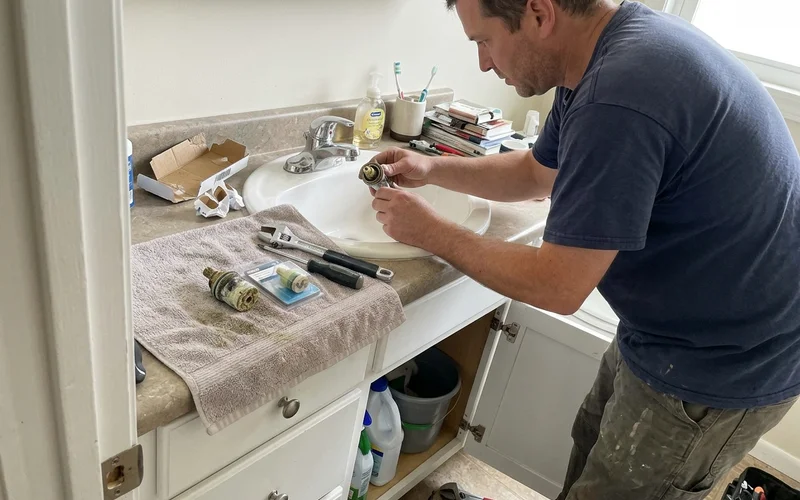
A good brass faucet body can outlast several cartridges. Our fixture repair and replacement work starts by finding which part actually failed, and checking the angle stops while the water is already off is sensible prevention.
Five habits that slow the wear
- Clean aerators every few months. Unscrew, soak in white vinegar for about ten minutes, rinse and reinstall.
- Never force a stiff handle. Stiffness means scale is already in the cartridge. Forcing it scores the discs or snaps the stem.
- Wipe fixtures dry. Evaporating spots leave crust that builds up at the base of handles.
- Exercise your angle stops. Close and reopen each one once or twice a year so it does not seize.
- Treat the water. A softener sized for your household removes the minerals before they reach the fixture. Our water softeners page explains sizing from a test at your tap.
If your faucets are wearing out early, the water heater is almost certainly scaling too. Call Lake Havasu Plumbing Pros at 928-555-0100 for a free estimate request, answered at any hour in English or Spanish by an automated assistant. Ask about any service call fee when you book.