Non-destructive locating

Slab Leak Repair Lake Havasu City: Leak Detection, Smoke Testing and Repiping

Slab leak repair Lake Havasu City homeowners can schedule without tearing up floors, plus hidden leak location behind walls and in buried lines, sewer gas smoke testing, and whole-house repiping.

Answered 24/7 English & Spanish Free estimate request All of the Lake Havasu area
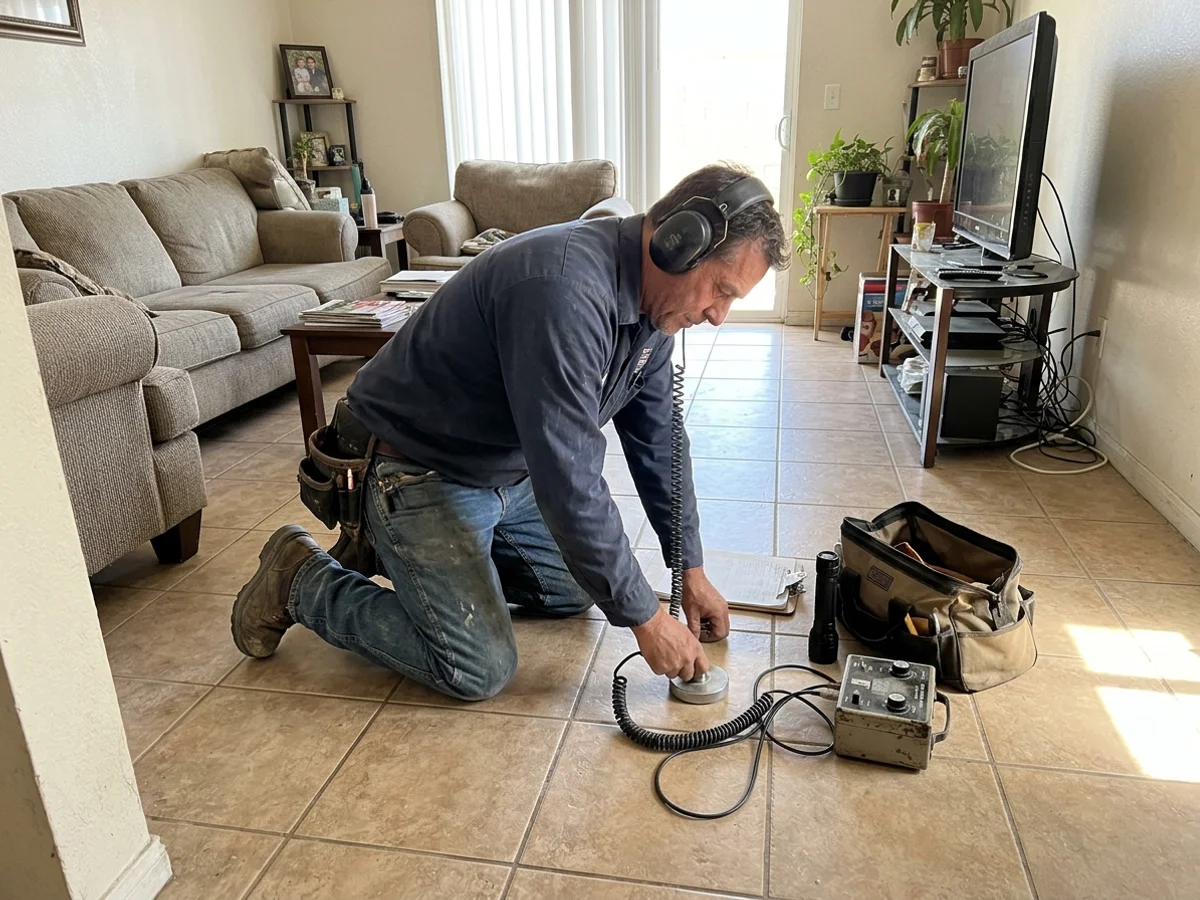
Plumber using acoustic leak detection equipment on a tile floor in a Lake Havasu City home
Serving the Lake Havasu area
Answered 24/7
Nights, weekends, holidays
Free estimate request
No obligation to proceed
Se habla español
Atendemos en español

The leaks that do the most damage are the ones nobody can see. A pinhole in a copper line under the slab, a fitting weeping inside a wall, a buried supply line cracked between the meter and the house. By the time a stain or puddle shows up, water may have been escaping for weeks.

Slab leak repair in Lake Havasu City starts long before anyone touches concrete. The first job is confirming there is a leak at all, then pinpointing it with equipment built to avoid guesswork. Lake Havasu Plumbing Pros can connect you with a local plumber for hidden leak location, slab leaks, sewer gas diagnostics, and whole-house repiping when patching stops making sense.

The Ten-Minute Meter Test

You can check for a hidden leak yourself before calling anyone. Turn off every faucet, toilet, irrigation zone, ice maker, and appliance that uses water. Then find the water meter and look for the low-flow indicator, usually a small triangle, star, or dial. Watch it for ten minutes.

If it does not move, your supply side is probably tight. If it creeps, water is going somewhere. Check the obvious places first: toilets that run, cabinets under sinks, the base of the water heater, and the hose bibs outside. If none of those explain it, the leak is likely inside a wall, under the slab, or in the buried line to the street. Mention the meter result when you call, because it changes how the plumber starts.

Clues That Point to a Hidden Leak

  • A water bill that jumped with no change in how the house is used.
  • A warm spot on a tile floor, which often means a hot water line leaking under the slab.
  • The sound of running water when everything is off.
  • Damp patches at the base of interior walls, along baseboards, or on exterior stucco.
  • Cracks or lifting in flooring where none existed before.

Any one of these is reason enough to run the meter test.

How a Leak Gets Pinpointed

Once a leak is confirmed, a pressure test separates supply-side problems from drain-side ones. Then the locating starts.

ToolWhat It DetectsWhere It Shines
Acoustic listeningThe sound of pressurized water escapingLeaks under concrete slabs
Thermal imagingSmall changes in surface temperatureHot water leaks under tile or stone
Electromagnetic tracingThe route of a metal pipeMapping a line before any cut

Concrete is opened at the located spot and nowhere else. One small access cut is a very different job from pulling up a whole hallway of tile.

Why Empty Houses Lose the Most Water

A large share of homes in Lake Havasu City are second homes, winter residences, or vacation rentals. When a supply line fails, a toilet fill valve sticks open, or a fitting cracks in a house nobody is living in, the water can run for weeks. Owners usually find out from a high bill, a call from a neighbor, or a musty smell on arrival.

A few habits prevent most of it. Close the main shutoff before you leave, or at least the supplies to the water heater, toilets, and washer. When you return, run the meter test before settling in. If you smell sewer gas after time away, it is usually dry traps rather than a broken line.

Sewer Gas Smell: Following Air Instead of Water

A lingering sewage smell means gas from the drain system is getting into the living space. There is often no wet spot to follow, which is what makes it hard to find. In summer heat well past 110 degrees, the water seal in an unused P-trap can evaporate in a vacant house, so run water in every drain first.

If the smell stays, smoke testing settles it. Non-toxic fog is pushed through the drain and vent system at low pressure and comes out wherever the system is open. One pass can reveal dry or missing traps, unsealed vent penetrations behind drywall, cracked drain lines inside wall cavities, and failed toilet wax rings or broken closet flanges.

Choosing a Repair Path

There are three realistic options for a slab leak.

  • Spot repair. Open the slab at the located point and fix that section. Best for one leak in an otherwise sound line.
  • Reroute. Abandon the leaking run under the slab and run a new line through the attic or walls. Often the better choice when that line has leaked before.
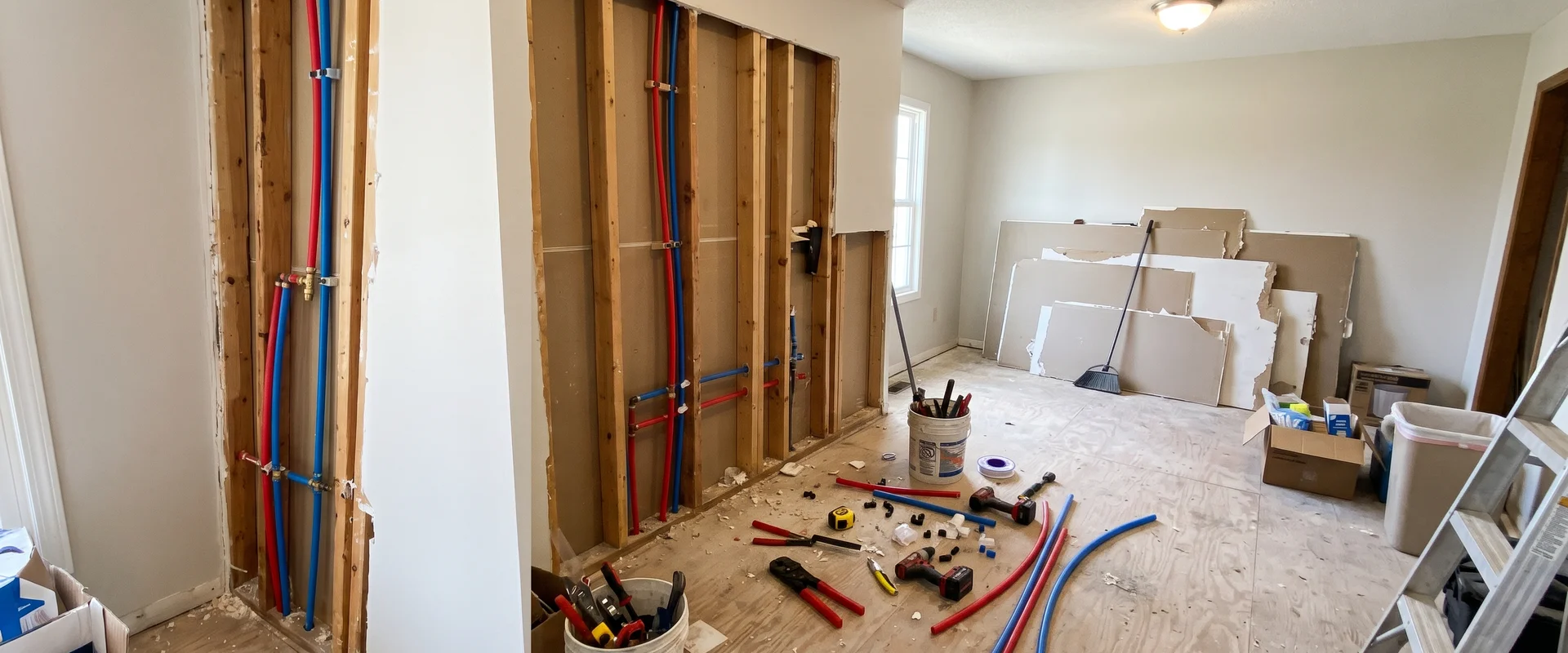
  • Whole-house repipe. Replace the supply system. Right when pressure is low everywhere, the first draw runs rusty, or pinholes keep showing up in different rooms.

For a repipe, PEX is flexible, needs fewer wall openings, and does not pit in hard water, which makes it the usual pick. Copper is rigid and long-lived where the layout suits it. After any repair the system is pressure tested and the meter rechecked before walls or floors are closed. Ask whether a permit applies to the scope of your job.

What Wears Supply Lines Out Here

Local water comes from wells in the Colorado River aquifer and is hard. Over years, copper carrying that water can pit from the inside, and pits become pinholes. Older homes may still have galvanized lines that corrode inward and choke pressure at every fixture, and some homes built in the 1980s and early 1990s may have gray polybutylene, which is known for failing at the fittings. Heat plays a part too, since water heaters, supply lines, and fittings in hot garages and attics work harder through the summer.

Leak detection, smoke testing, and repiping are available across Lake Havasu City, Desert Hills, Crystal Beach, the Parker Strip, and Topock. Our leak and repiping guides go deeper, and you can request a free estimate any time.
The difference

Why choose us for leak & slab

Locate before opening anything

Acoustic and thermal equipment narrows a slab leak to a small area. Cutting concrete is the last step, not the first.

Empty-house awareness

Second homes and rentals can leak for weeks unnoticed. Arrival checks and shutoff plans are part of the conversation.

Smoke testing for sewer gas

Non-toxic fog through the drain and vent system finds the escape point instead of opening walls on a hunch.

Repipe when patching is a waste

Pinholes in several places and low pressure throughout mean the pipe is the problem. You hear that plainly.

Verified after repair

Pressure test and meter check after the work, so you leave knowing the leak is closed.

Answered at any hour

A slab leak that has surfaced or water running inside a wall is urgent, and the line is answered 24/7.

Step by step

How our leak & slab work goes

  1. 01

    Confirm there is a leak

    A meter check and a pressure test show whether water is escaping, and whether it is on the supply side or the drain side.

  2. 02

    Locate it without demolition

    Acoustic listening, thermal imaging, and line tracing narrow it to one spot before anything is opened.

  3. 03

    Lay out the options

    Spot repair, reroute, or repipe. For a slab leak those differ a lot in scope and lifespan, and all three are explained.

  4. 04

    Repair and verify

    Fix it, re-pressurize, and re-check the meter so you know the leak is closed before the plumber leaves.

Get a free estimate before anything is scheduled

Call and describe the problem. We triage it over the phone, quote it honestly, and there are never surprises when the truck shows up.

Side by side

How we compare

Feature Typical provider Lake Havasu Plumbing Pros
Finding the leak Open drywall and look Acoustic, thermal, and line tracing first
Slab leaks One quoted approach Spot repair, reroute, or repipe compared honestly
Sewer gas odor Reseal a toilet and hope Smoke test to find the actual escape point
Repeat pinholes Patch each one Assess whether the system needs repiping
After the repair Job closed Pressure test and meter verification
On the job

Our leak & slab work

Click any photo to enlarge.

Common questions

Leak & Slab FAQs

How can I tell if I have a slab leak?

Common signs are a warm patch on a tile floor, a water bill that jumped with no change in use, the sound of running water with everything off, new cracks in flooring, or damp spots along a baseboard. Under concrete, a leak can run for weeks before anything shows.

Can a leak be found without tearing up the floor?

Yes, that is what the equipment is for. A meter and pressure test confirm the leak and which system it is on. Acoustic sensors pick up escaping water, thermal imaging shows the warmth of a hot-side leak, and line tracing maps the pipe route. Concrete is opened only at the located spot.

I just opened up my Lake Havasu City home after months away and the bill is high. What should I check?

Turn off every fixture and watch the meter's low-flow indicator. If it moves, water is escaping. Check toilets for running, look under sinks and around the water heater, then call if you cannot find it. This is one of the most common calls from returning second-home owners.

Why does my house smell like sewer when nothing seems to be leaking?

Most often a dry P-trap, especially in a home that sat empty through the summer heat. Run water in every drain first. If the smell stays, the cause may be an unsealed vent, a cracked drain line, or a failed toilet wax ring.

Is smoke testing safe?

Yes. The fog is non-toxic and pushed through the drain and vent system at low pressure. Wherever the system is open to the living space, the fog appears, which pinpoints the problem without opening walls.

Should I repair the slab leak or reroute the line?

A single leak in an otherwise healthy line is often a spot repair. If that run has leaked before or the copper is pitted, rerouting it through the attic or walls usually makes more sense than cutting the slab again. You will get both options to compare.

When does a whole-house repipe make sense?

Low pressure at every fixture, rusty water on the first draw, or pinhole leaks in more than one place all point to the pipe itself. Older galvanized lines and gray polybutylene are the usual candidates.

PEX or copper for a repipe?

Both are proven. PEX is flexible, needs fewer wall openings, and does not pit in hard water. Copper is rigid and long-lived where conditions suit it. The choice depends on layout, access, and budget.

How do I get started?

Call Lake Havasu Plumbing Pros at 928-555-0100 or request a free estimate online. Ask about any service call fee before you book.

Still have a question?

Call and describe it. We triage over the phone before anyone is dispatched.

Call 928-555-0100
Read first

Guides on leak & slab

Plumber loading tools into a service van at dusk in Lake Havasu City
Answered 24/7, English & Spanish

Need leak & slab in the Lake Havasu area?

Call and describe what is happening. Your call is answered in English or Spanish at any hour, and the estimate is free.

Free estimate request All of the Lake Havasu area Se habla español
928-555-0100