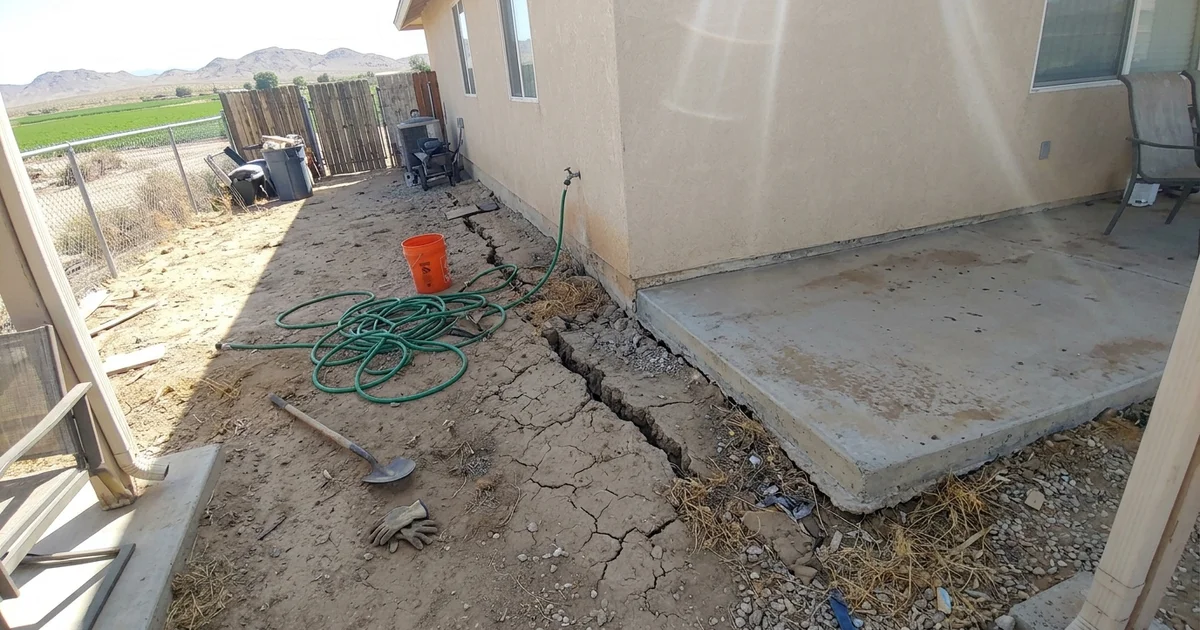
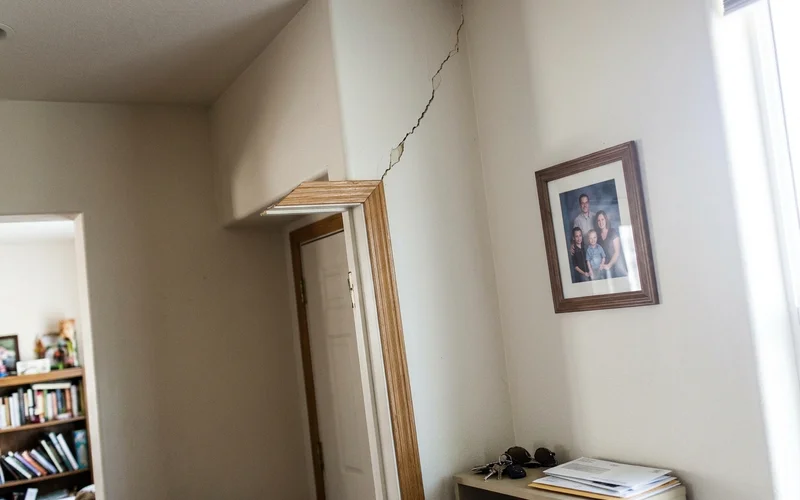
A new crack runs across the tile. A door sticks in summer and swings freely in winter. A diagonal line appears in the drywall above a doorway. Is water escaping under the house, or is the ground moving? The answer decides whether you need a plumber at all.
Two example homes
Home A sits on a Lake Havasu City lot with a lush yard on a drip and spray system, and the irrigation runs heavily through the summer. The owner finds a new crack in the hall tile. The water bill is normal and the crack is dry. Two doors began sticking around the same time and loosen again in the cooler months.
Home B is a single-story house on a slab. The owner finds a similar crack, but the water bill jumped last month with no change in use. The tile near the crack feels warm in the early morning, and with every tap off at night there is a faint hiss.
Home A is very likely ground movement. Home B is very likely a hot-water slab leak. Most real cases fall somewhere in between, which is why a test matters more than a guess.
Seven clues, sorted
| Clue | Points to a leak | Points to ground movement |
|---|---|---|
| Water bill | Jumped with no change in use | Normal |
| Floor temperature | Warm spot with no heat source | Normal |
| Sound with every tap off | Hiss or running water | Silent |
| Moisture | Damp floor, baseboard or soil in dry weather | Cracks stay dry |
| Timing | Worsens steadily | Changes with the seasons |
| Doors and windows | Usually unaffected | Stick at certain times of year |
| Crack pattern | Concentrated in one area | Radiating from door and window corners, matching exterior stucco cracks |
A leak tends to affect one area because water escapes from one point. Ground movement tends to affect the house more broadly.
Why the two get tangled
Each can cause the other. Moving ground flexes the pipes under a slab until one fails. A leak then soaks the soil and makes it move more. When both are present, fix the leak first, because the water is feeding the movement.
What is different about desert lots
Most of the year the soil around a Lake Havasu City home is bone dry. What changes it is water you add: irrigation, a broken sprinkler line, a pool overflow, or roof runoff pooling along one wall during a summer storm. If one side of the house gets far more water than the others, that side is where ground movement shows up first. Fixing the water source often matters as much as fixing the crack.
The test that settles it
- Meter check (you can do this). Turn off every fixture, irrigation and the softener, and watch the low-flow indicator at the meter. Movement means water is leaving. The full steps are in how to tell if you have a slab leak.
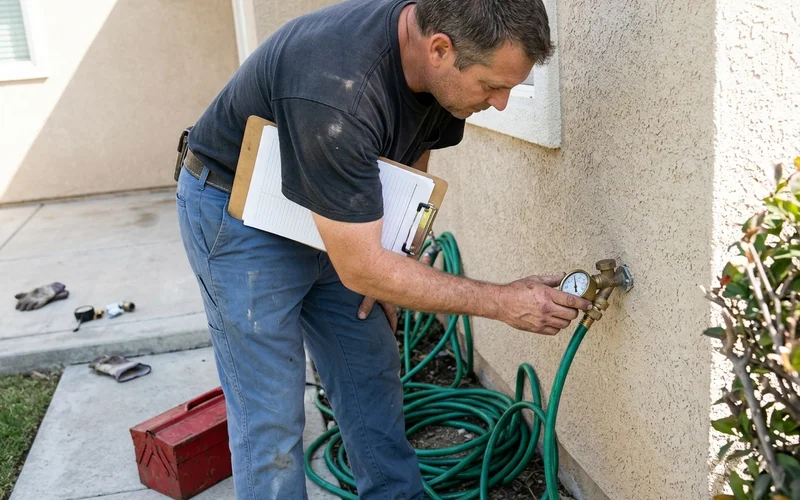
- Isolated pressure test (plumber). The supply system is isolated and pressurized, often from a hose bib, and the gauge is watched. A steady gauge means no supply leak. A falling gauge confirms one, and the rate hints at its size.
- Locating (plumber, only if the test fails). Acoustic listening, thermal imaging and line tracing find the escape point, so only that spot gets opened.
A gauge that holds is valuable information. It means nobody should be breaking your floor to look for a leak.
Acting on the answer
It is a leak. Options range from a spot repair through the slab to rerouting the line through walls or the attic. Rerouting is common because it avoids opening floors and leaves the old line abandoned under the concrete.
It is ground movement. Plumbing is not the fix. Keep roof runoff discharging several feet from the foundation, avoid soaking the soil right against the house, check irrigation for leaks and aim for steady rather than on-and-off watering. If cracks keep widening, call a foundation professional.
It is both. Stop the leak first, let the soil settle, then judge how much structural work remains.
Our leak detection and slab leak repair service starts with exactly this testing. Lake Havasu Plumbing Pros answers 928-555-0100 at any hour through an automated bilingual assistant that routes what you are seeing to a local plumber. Ask about any service call fee before booking.