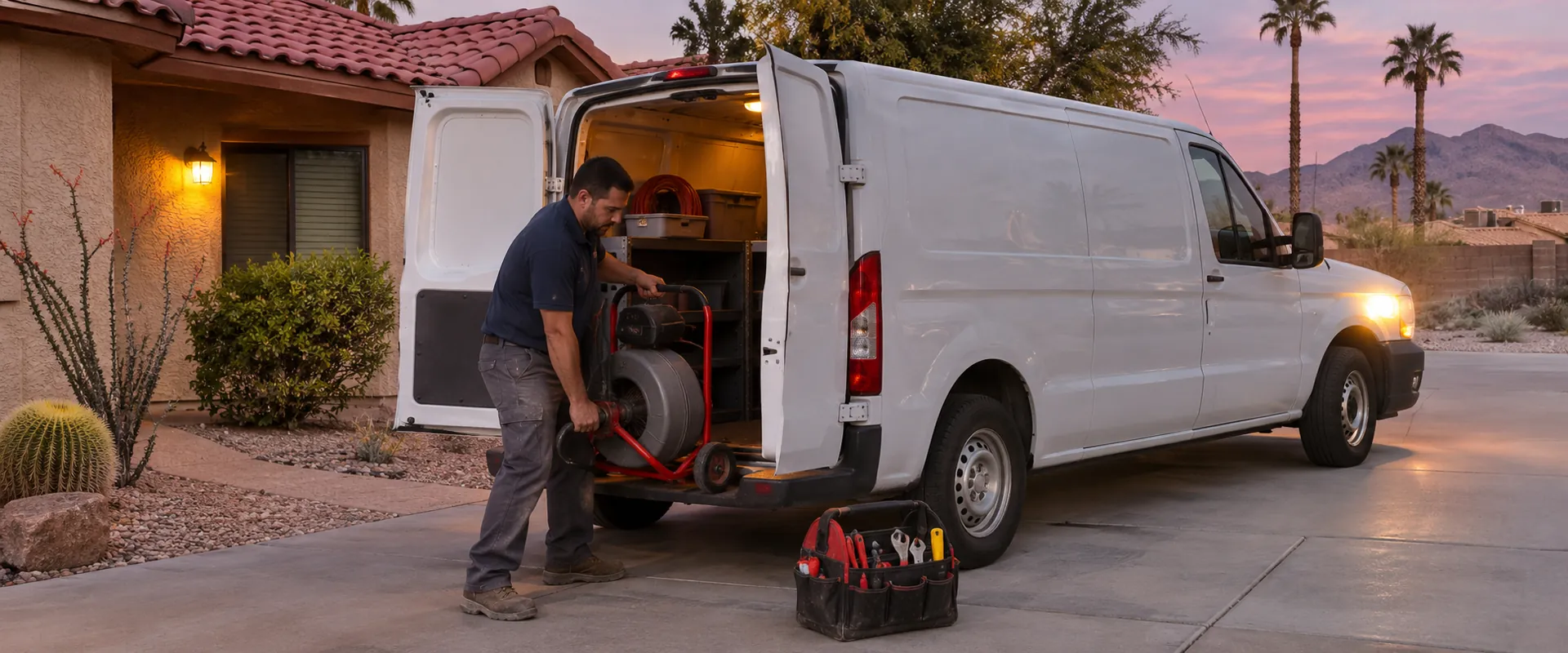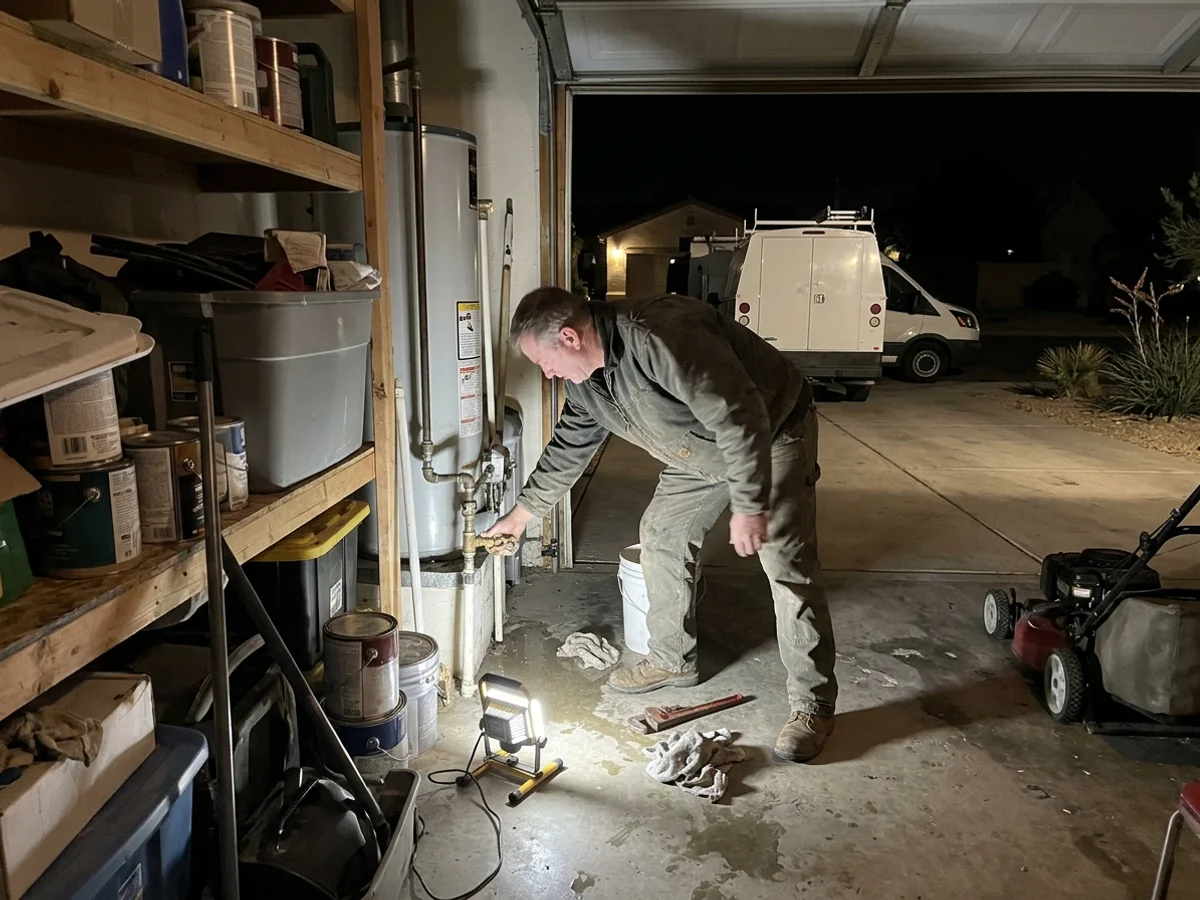
Water does not wait for business hours. A washer hose splits on a Saturday night, a water heater lets go during a July heat wave, or the shower fills with sewage while a vacation rental is full of guests. In that moment you need one thing: a phone that gets answered and a plumber who knows what they are walking into.
That is the reason this line exists. When you need an emergency plumber in Lake Havasu City, an automated bilingual assistant answers your call at any hour, in English or Spanish. It takes down what is happening and routes the details to a local plumber. Your call does not sit in a voicemail box until Monday. Here is how the call works, what to do before help arrives, and how to tell a midnight problem from one that can wait. Lake Havasu Plumbing Pros covers the whole service area with one number.
What Happens in the First Ten Minutes After You Call
The assistant asks a short set of questions, and each answer changes what the plumber brings.
- What is happening, and where? A leak under a kitchen sink and water coming through a ceiling are different jobs.
- How long has it been going on? Water that has run for hours points to drywall, flooring, and cabinet checks as well as the repair.
- Is the main water closed? If not, you will be told to close it right away when that will stop the damage.
- One fixture or the whole house? Sewage at every drain means the main line, so a drain machine and camera go on the truck instead of a hand auger.
The questions and the routing are the same whether you speak English or Spanish. Second-home owners calling from out of state can give the name of a neighbor, cleaner, or property manager who can open the door.
Shutting Off the Water Before Help Arrives
Most of the cost in a plumbing emergency comes from how long the water keeps running. A split half-inch supply line under full pressure can put out several gallons a minute, so a fast shutoff matters more than anything else you do.
- Find the main valve. It is usually near the front hose bib, in the garage where the supply line enters, or in the meter box near the street.
- Turn it the right way. A ball valve needs a quarter turn until the handle sits across the pipe. An older gate valve takes several turns clockwise. If it will not budge, stop.
- Cut power near the water. Switch off breakers feeding outlets, appliances, or lights in the wet area before you walk into it.
- Drain the lines. Open the lowest faucet in the house, often a tub spout or an outside hose bib, to release the water still in the pipes.
- Shut down the water heater if it is involved. Close the cold supply on top and turn off the gas or the breaker.
When you call back or stay on the line, say the main is closed. Our guide to shutting off your main water valve shows where it usually hides.
Tonight or Tomorrow Morning?
Not every problem needs a plumber at midnight. Use this as a quick sort.
| Problem | What to Do Right Now | Can It Wait? |
|---|---|---|
| Burst pipe or a leak you cannot stop | Close the main and call | No |
| Sewage rising through a tub, shower, or floor drain | Stop all water use and call | No |
| No water at any faucet | Check whether neighbors have water, then call | No |
| Strong sewer smell inside the house | Ventilate and call | No |
| Water heater leaking from the tank | Close the cold supply, cut gas or power, call | No |
| One slow drain, a drip, or a running toilet | Close the fixture stop if needed | Yes, book a daytime visit |
If you are not sure, call anyway. Describing the situation takes a couple of minutes, and you will know whether it needs attention tonight.
When Nobody Is Home: Second Homes and Vacation Rentals
A large share of houses in Lake Havasu City are second homes, winter residences, or short-term rentals. That changes what an emergency looks like. A supply line or toilet fill valve can fail in an empty house and run for days or weeks before a neighbor notices water under the garage door or a pool of it on the patio.
Out-of-town owners can call the same number, explain what someone on site is reporting, and pass along access details. Rental managers can call on behalf of a guest. Closing the main before you leave and checking the meter when you come back prevent most of these calls in the first place.
Heat, Hard Water, and the Calls That Follow
Local conditions shape the emergencies that come in. Summers run well past 110 degrees, and many water heaters sit in garages that bake for months. The water comes from wells in the Colorado River aquifer and is hard, so mineral scale builds up inside tanks and valves. A tank already weakened by scale often gives out in peak heat. That same scale crusts old gate valves until they will not close, which homeowners usually discover in the middle of a leak.
Sewer backups have a local twist too. The city decided in 2001 to replace septic tanks with a central sewer, but some outlying homes may still be on septic. Knowing which one your property uses helps point the diagnosis in the right direction from the first call.
Mistakes That Turn a Leak Into a Flood
- Forcing a seized valve. A snapped valve stem means water you can no longer stop at the house.
- Running water while the drains back up. Every flush adds to what is coming up through the lowest drain.
- Stepping into water near live outlets. Cut the power first.
- Waiting to see if it stops. Hidden leaks rarely fix themselves, and the meter keeps turning.
Before You Book: Fees, Estimates, and Contractor Checks
An emergency is stressful enough without surprises. Request a free estimate and ask about any service call or after-hours fee on the phone before booking. It is also fair to ask what the plumber will do first to stop the damage and whether the permanent repair can be scheduled separately once things are stable. Arizona homeowners can look up a contractor through the Registrar of Contractors at roc.az.gov before work begins.
Emergency calls are handled across Lake Havasu City, Desert Hills, Crystal Beach, the Parker Strip, and Topock. If water is running right now, close the main and call 928-555-0100.