Check the shower head, the faucet aerators, and the glass door on the shower. That white crust is the visible part of a much bigger problem. The same minerals are building up inside the water heater, the valves, and the supply lines, where nobody can see them until something fails.
In many parts of the country, a softener is a comfort upgrade. Around the lake it is closer to routine maintenance. Water softeners in Lake Havasu City are mostly about protecting expensive equipment from scale, and the right setup earns its keep in a water heater and fixtures that last as long as they should. Lake Havasu Plumbing Pros can connect you with a local plumber who tests your water, sizes the system properly, and explains what each option will and will not do.
Start With a Reading From Your Own Tap
The only raw water source here is groundwater from wells in the Colorado River aquifer, and the river carries a heavy mineral load. The short version is that the water is hard. How hard it is at your house is a question for a test, not a guess.
A hardness test at your fixture takes a few minutes, and you see the result. You can also check the city’s current water quality report for the latest published figures. Every sizing decision after that is based on the real number, which is the difference between a softener that runs efficiently for years and one that regenerates constantly and wears out its resin.
Where Hard Water Does Its Damage
Hardness is not a health problem. It is a plumbing and appliance problem, and in hard water it is a steady one.
- Water heaters collect scale on the tank bottom, run hot, and fail early.
- Tankless heaters clog their heat exchangers and need regular descaling.
- Faucet cartridges and valve seats grind against mineral deposits until they drip or seize.
- Shower heads and aerators lose flow as scale closes the openings.
- Dishwashers and washing machines work harder and leave spots and film.
Heat speeds it up. With summers well past 110 degrees and supply water that stays warm, minerals come out of solution faster inside the plumbing.
Matching the System to the Problem
Four types of equipment often get sold together, but each solves a different problem.
| If Your Goal Is… | The Right Tool | What It Will Not Do |
|---|---|---|
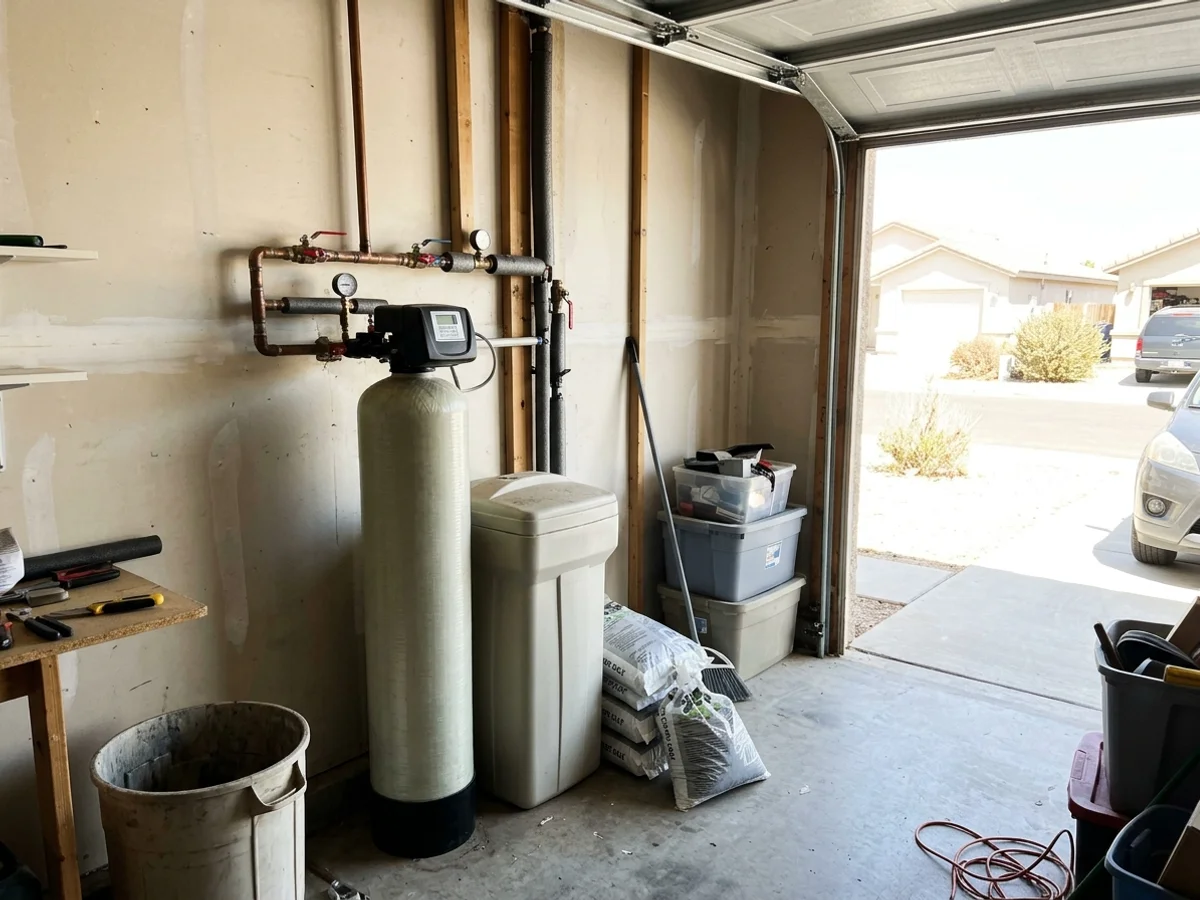
| Protecting the heater, pipes, and fixtures | Ion-exchange softener | Improve drinking water taste on its own |
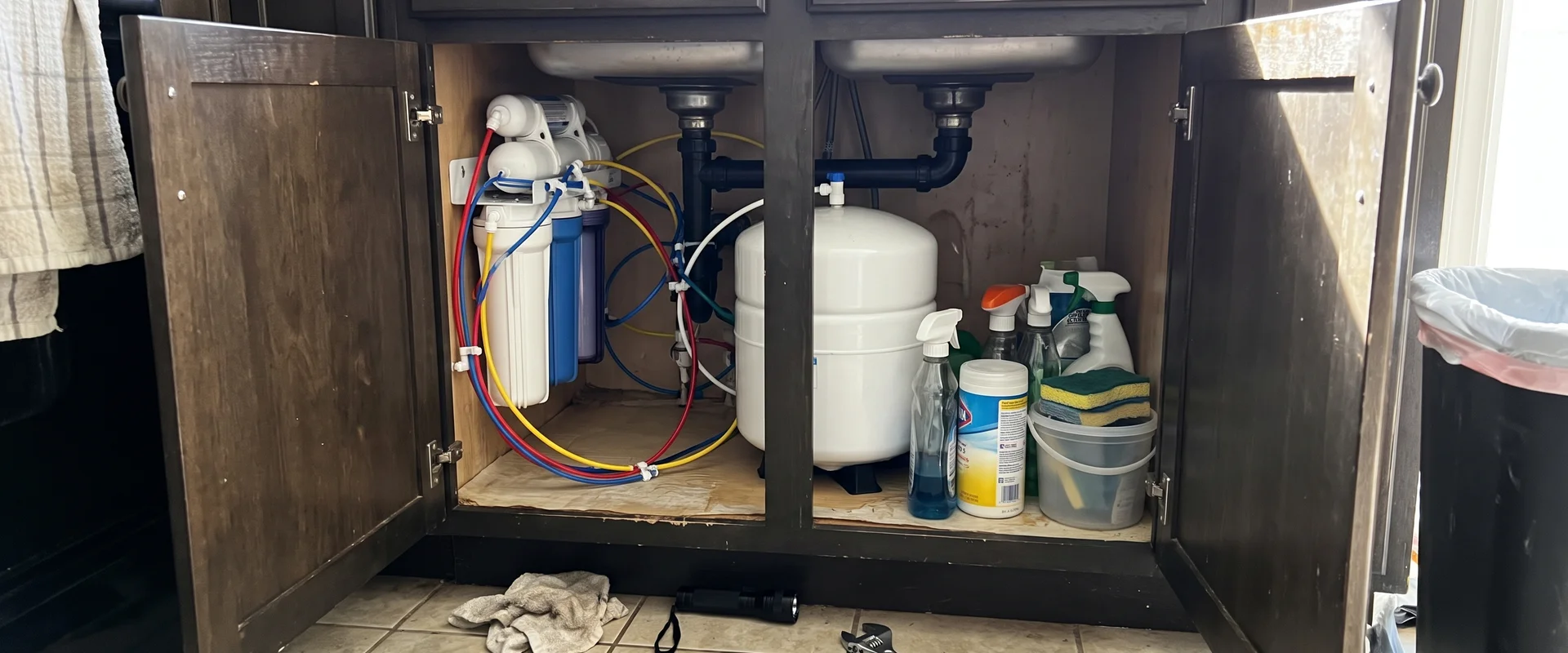
| Better-tasting water for drinking and cooking | Under-sink reverse osmosis | Protect the rest of the plumbing |
| Less sediment, chlorine taste, or odor at every tap | Whole-house filtration | Remove hardness |
| Reducing scale without salt | Salt-free conditioner | Remove hardness; protection is limited in hard water |
A sensible combination for many homes is a softener for the whole house plus an RO tap in the kitchen. That covers plumbing protection and drinking water without paying twice for the same result.
How Softener Sizing Actually Works
The math is simple. Multiply the household’s daily water use by the measured hardness, and you get the grains the softener has to remove each day. The unit needs enough capacity to handle that load and still go several days between regenerations.
Get it too small and it regenerates constantly, burns through salt, and wears its resin out early. Get it too big and you pay more without adding protection. A household of two that only visits a few months a year has very different needs from a family of five living here full time, and both are different again from a vacation rental that fills up every weekend. That is why the tap test and a quick conversation about how the house is used come before any recommendation.
Softeners in Part-Time and Rental Homes
Many houses in Lake Havasu City are second homes, winter residences, or vacation rentals. Treatment still matters in those homes, because the water heater and fixtures face the same minerals whenever the house is in use.
- Leaving for a while: Put the softener in bypass or vacation mode if the valve allows, and leave salt in the brine tank.
- Coming back: Run every tap for a few minutes, flush the RO line before drinking from it, and check that the valve clock is correct.
- Rentals: Heavy guest use can drain softener capacity quickly, so regeneration settings and salt checks should match occupancy.
Questions to Ask Before You Buy
- Was the hardness tested at my tap? A factory setting or a general figure is not good enough.
- Is there a bypass valve? Without one, servicing the softener means shutting off water to the house.
- Where will the brine tank sit? Salt bags are heavy. If the tank is awkward to reach, refills get skipped.
- Do I actually need RO, or just a softener? You should hear a straight answer.
- Will a filter alone handle scale? It will not. Carbon and sediment filters do nothing for hardness.
Living With the System
Softeners in hard water use more salt than in soft-water areas, and many households top up the brine tank every few weeks. RO systems need filter changes on a schedule and a new membrane every few years. Once treatment is in place, the visible changes come fast: less crust, spot-free glassware, soap that lathers easily. The bigger benefits show up over years, in a water heater that keeps its efficiency and faucets that stop needing new cartridges. You can request a free estimate, and our water treatment guides cover sizing in more detail.
Water treatment installs and service are available across Lake Havasu City, Desert Hills, Crystal Beach, the Parker Strip, and Topock.