Plenty of homeowners around the lake are on their second or third water heater sooner than they expected. It is rarely a bad brand or bad luck. It comes down to what flows through the tank every day, where the tank sits, and how hot the summers get.
Water heater repair in Lake Havasu City goes better when the first question is why the unit is struggling, not only which part broke. Gas, electric, or tankless, the work covers thermostats, heating elements, pilot and gas control problems, anode rods, flushing, tankless descaling, and full replacement when that is the honest answer. Calls to Lake Havasu Plumbing Pros are answered around the clock in English or Spanish and routed to a local plumber.
Signs Your Heater Is Asking for Help
Water heaters usually give warnings before they quit. Knowing what each one means saves time on the call.
- Popping, crackling, or rumbling. Water trapped under sediment flashes to steam. A heavy scale layer is announcing itself.
- Hot water runs out faster than it used to. Sediment is taking up tank volume, the burner is fighting through scale, or a failed dip tube is mixing cold water in at the top.
- Rusty water from the hot side only. The anode rod is probably used up and the tank is corroding inside. Treat this as a late warning.
- No hot water at all. On gas units, think pilot, thermocouple, or gas control. On electric units, a tripped high-limit switch, a burned element, or a bad thermostat. These are often repairs.
- Moisture at the base. It may be a loose fitting, a relief valve doing its job, or a tank starting to fail. Test before condemning the heater.
- Tankless error codes. Scale-related codes usually mean the heat exchanger is choking and overdue for descaling.
The Mineral Problem Under the Tank
Local water comes from wells in the Colorado River aquifer, and it carries a heavy mineral load. In plain terms, the water is hard. Readings vary from home to home, so confirm yours with a test at the tap or in the city’s current water quality report rather than going by a general number.
Every time the tank heats, calcium and magnesium drop out of the water and settle on the bottom. That layer acts like insulation between the burner or lower element and the water. Burn cycles get longer, energy use climbs, recovery slows, and the steel at the bottom runs hot and corrodes faster. Add a garage that stays above 100 degrees for months and incoming water that never gets cold in summer, and an early failure is the expected result. Hardness is a plumbing and appliance problem, not a health problem, but for a water heater it is the main one.
Fix It or Retire It
| What You Are Seeing | Usual Next Step |
|---|---|
| Younger unit with a failed element, thermostat, or thermocouple | Replace the part |
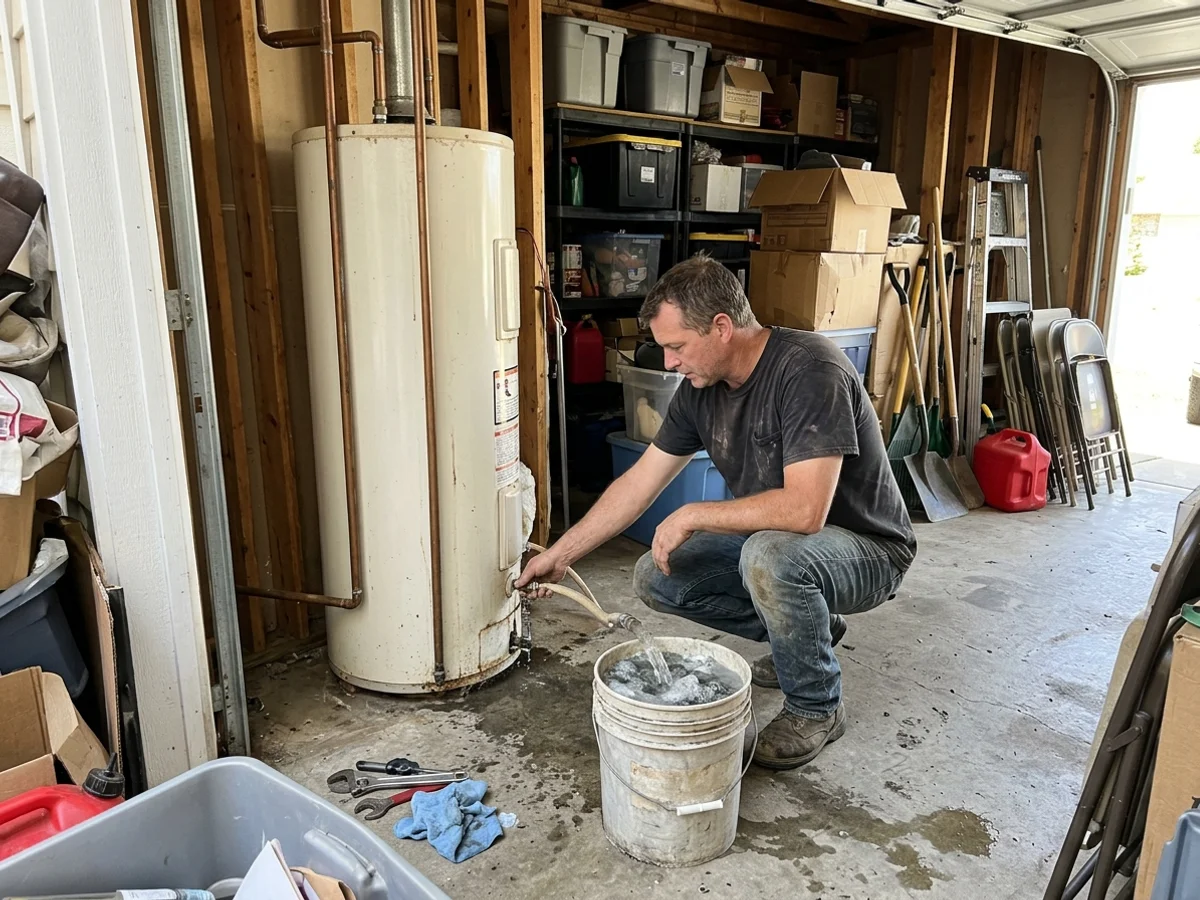
| Popping tank, moderate scale, no leaks | Flush it and check the anode |
| Rusty hot water and a spent anode on an older tank | Plan a replacement soon |
| Water seeping from the tank body itself | Replace |
| Tankless unit showing scale codes | Descale and set a schedule |
You should see the evidence yourself: what comes out in a flush, the state of the anode rod, the corrosion at the fittings. Request a free estimate and ask about any service call fee before booking.
Tankless Owners: Plan on Descaling
Tankless heaters are efficient and can last a long time, but they do not tolerate hard water well. Water moves through narrow heat exchanger passages at high temperature, exactly where scale forms fastest. Manufacturer intervals assume average water.
Most tankless units here need descaling at least once a year, and busy homes may need it every six months. The service circulates a descaling solution through the heat exchanger with a small pump, then flushes the unit and cleans the inlet screen. Units installed without any water treatment often show trouble within a few years if nobody explained this schedule to the owner.
Closing Up and Opening a Second Home
A lot of houses in Lake Havasu City are occupied only part of the year, and the water heater needs a plan for that.
- Before you leave: Close the cold supply to the heater. Set a gas unit to vacation or pilot, or switch an electric unit off at the breaker.
- When you return: Look for moisture or rust at the base before restarting, and listen for popping during the first heating cycle.
- Rental properties: A heater that runs hard all summer for guests and then sits idle benefits from a flush between seasons.
Habits That Shorten Heater Life
- Never flushing the tank. Scale piles up quietly until the noise starts.
- Ignoring the anode rod. Replacing a spent rod is one of the cheapest ways to extend tank life.
- Leaving the relief valve untested. It is the safety device that keeps pressure under control.
- Treating a softener as optional. In hard water, untreated supply is what wears tanks out.
What Goes Into a Replacement Done Right
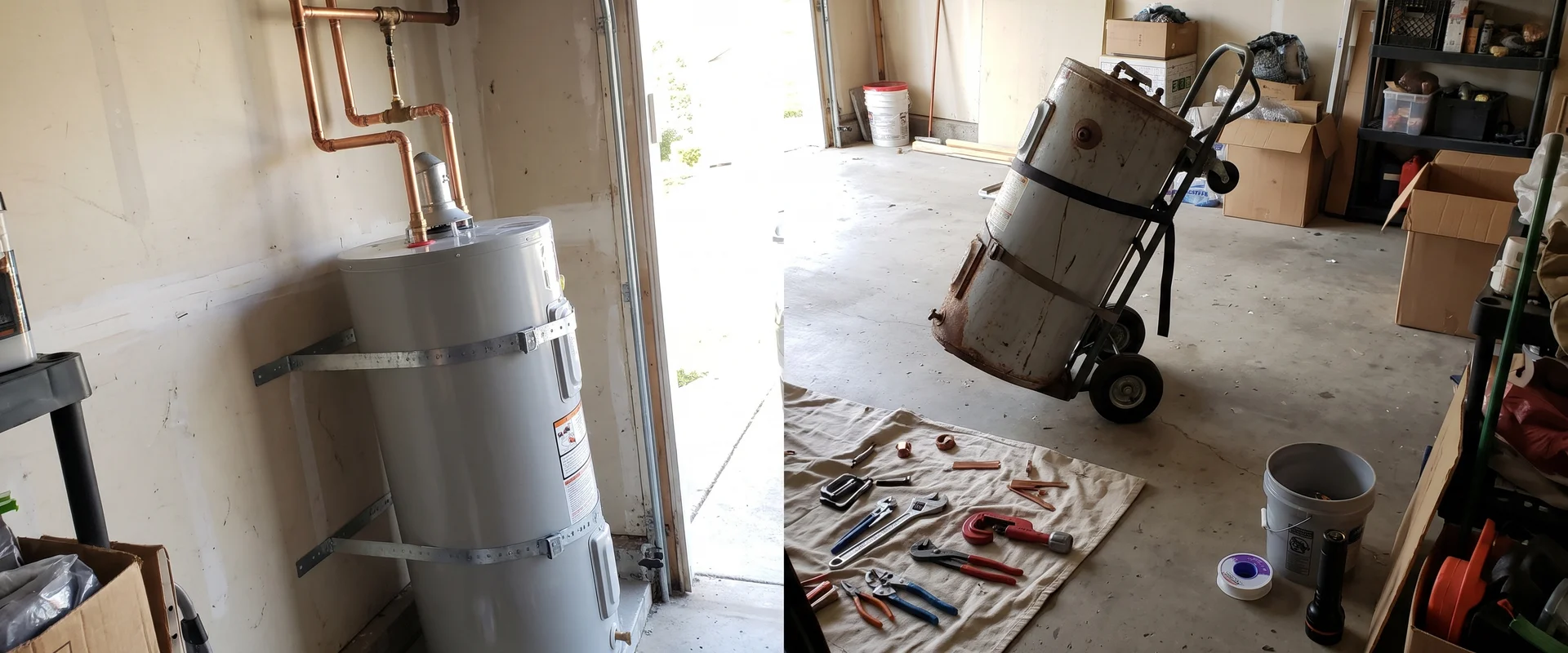
When it is time to replace, sizing matters more than the brand. Capacity gets matched to back-to-back showers, overlapping laundry and dishwasher use, and the recovery loss that scale brings over time. A proper installation includes thermal expansion control where the system is closed, relief valve discharge piped to an approved location, correct venting and new connectors on gas units, secure strapping, and haul-away of the old heater. Ask whether a permit applies to your job before work starts.
After the install, a flushing and anode schedule keeps the new heater from following the old one. Our water heater guides explain the failure process in more depth.
Water heater service is available across Lake Havasu City, Desert Hills, Crystal Beach, the Parker Strip, and Topock. If a tank is leaking right now, close the cold supply, shut off the gas or power, and call.