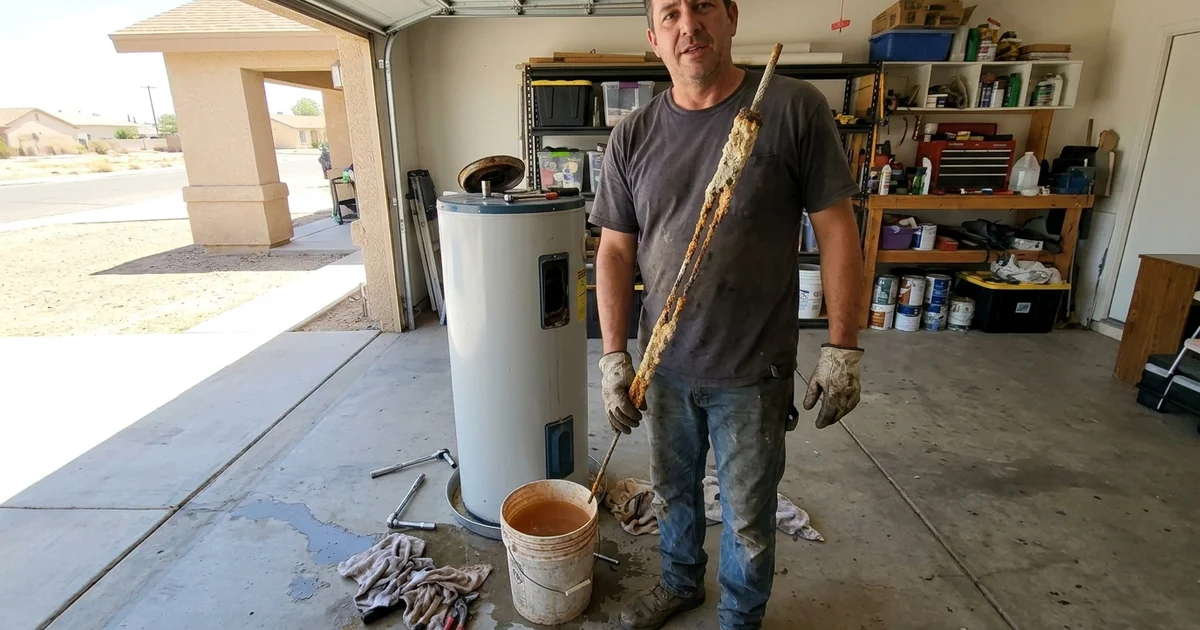
The part that decides how long a tank water heater lasts is one most owners never see. It is a metal rod, three to four feet long, screwed into the top of the tank and hanging in the water. Its whole job is to corrode so the tank does not. In Lake Havasu City, where the water comes from wells in the Colorado River aquifer and carries a heavy mineral load, that rod is under more pressure than the label assumes.
If you are trying to decide between a new rod, doing nothing, or saving the money for a new heater, start with the test below.
The three-question test
Answer these in order. The first “stop” answer settles it.
| Question | Answer | What it means |
|---|---|---|
| Is water seeping from the tank shell or bottom seam? | Yes | Stop. The steel has already corroded through. No rod can fix that. Plan a replacement. |
| Does the hot water run rusty while the cold runs clear? | Yes | The rod is probably gone and the tank is rusting. A rod may buy some time on a younger tank, but expect limited life left. |
| Is the heater in the first half to two-thirds of its rated life? | Yes | A new rod is usually one of the best-value repairs you can make on a water heater. |
If the tank is older and none of the warning signs apply, the rod still matters. But have someone look at the sediment layer as well before you decide, because heavy scale changes how much life the tank has left.
Three things that eat rods faster here
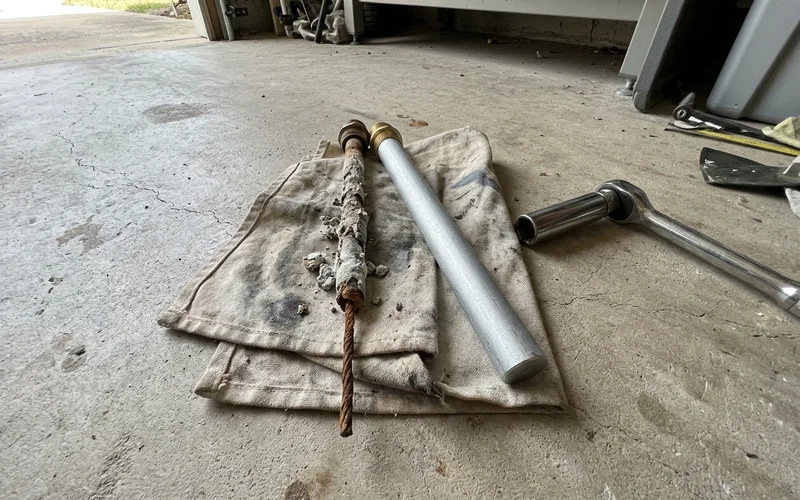
Hard water. Water with a heavy mineral load conducts electricity better, and that speeds up the reaction that consumes the rod. Confirm your own reading with a test at the tap or in the city’s current water quality report. You do not need the exact number to know the rod is working hard.
Garage heat. Lake Havasu City summers run well past 110 degrees, and many heaters live in garages that get even hotter. Heat speeds up corrosion on the rod and on any bare steel inside the tank.
Idle months. Second homes and rentals that sit empty can leave a full tank of warm, mineral-heavy water standing for weeks. The rod keeps working the whole time, even when nobody is using hot water.
These three together are part of a bigger pattern covered in why water heaters fail early here.
Choosing a rod
| Rod type | Best fit | Trade-off |
|---|---|---|
| Aluminum-zinc | Untreated hard water, sulfur smell from hot taps | Slightly gentler protection, longer life |
| Magnesium | Homes with a water softener | Strongest protection, wears faster |
| Powered (impressed current) | Owners who never want to check a rod again | Needs a nearby outlet and costs more up front |
For most tanks on untreated water, aluminum-zinc is the sensible default. If you have a softener, magnesium becomes a reasonable choice again, because softened water keeps scale off the tank bottom even though it is a little harder on the rod.
What a rod check actually involves
- Gas set to off, or the breaker switched off on an electric unit.
- Cold inlet closed and a few gallons drained so the water level drops below the port.
- The hex head on top broken loose. After years of heat and minerals it is often seized, and this is where tanks get damaged by someone leaning on a breaker bar.
- Rod pulled, inspected, and replaced if it is worn to the core wire or close to it.
- Tank refilled, air bled from a hot tap, and heat restored.
This pairs naturally with a tank flush, since the tank is already partly drained.
Local expert insight
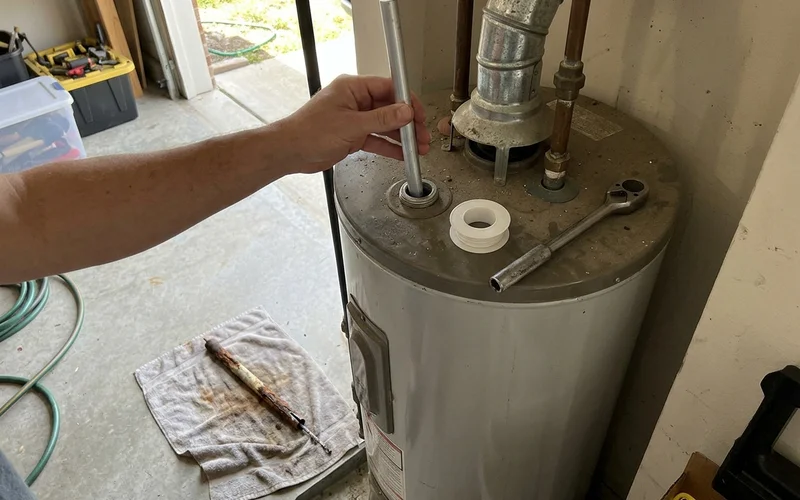
Low garage ceilings and heaters tucked under cabinets are common. A rigid rod will not come straight out in those spots. Segmented, flexible rods are made for exactly this, so mention the clearance when you call.
Why the math favors the rod
An anode is an inexpensive part, and checking it adds little time to a flush you should be doing anyway. A replacement heater is a major expense, plus haul-away, plus any permit the job needs, plus cleanup if the old tank let go on the garage floor. Even one or two extra years from a tank usually covers the rod many times over.
When you call Lake Havasu Plumbing Pros at 928-555-0100, an automated bilingual assistant answers at any hour, notes the heater’s age, fuel type and symptoms, and routes the details to a local plumber who can bring a rod that fits. Rod checks and flushes are both part of our water heater service. Request a free estimate and ask about any service call fee before booking.