Some clogs are just clogs. A wad of hair in a tub drain or a kitchen sink that slowed after a holiday dinner usually clears in one visit and stays clear. Others keep coming back, and those are the ones worth understanding, because a drain that backs up three times in a year is telling you something about the pipe.
Drain cleaning in Lake Havasu City works best when two questions get answered: what is blocking the line, and why did it close in the first place. Lake Havasu Plumbing Pros can connect you with a local plumber who clears the blockage with the right tool and, when the pattern calls for it, sends a camera down the line so you can see what is actually there.
City Sewer or Septic? Ask This First
Before any equipment comes off the truck, it helps to know where your drains end up. The city decided in 2001 to build a central sewer system to replace septic tanks. Many homes are now connected, but some outlying properties may still be on septic.
That changes the diagnosis. On city sewer, a whole-house backup usually means a blockage or defect in the lateral between the house and the street. On septic, the same symptoms can come from a tank that needs pumping or a drain field that is no longer taking water, and no amount of cabling fixes either one. If you are not sure which system your home uses, say so when you call, and it can be checked as part of the visit.
Where the Clog Is Hiding
Symptoms narrow down the location before anyone opens a cleanout.
- One slow fixture. The clog is in that sink, tub, or shower trap or its branch line. Hair and soap in bathrooms, grease and food scraps in kitchens.
- A whole bathroom acting up. A shared branch is narrowing, often where the bathroom group joins the main.
- Gurgling when the washer drains. The line downstream cannot carry the flow, so air gets pulled through nearby traps.
- Water rising in a tub or floor drain when you flush. The main line is blocked below everything else. Stop using water and call, at any hour.
Sorting this out on the phone means the right machine shows up. A hand auger will not touch a root-filled main, and a large drum machine is overkill for a bathroom sink.
Choosing Between a Cable and a Jetter
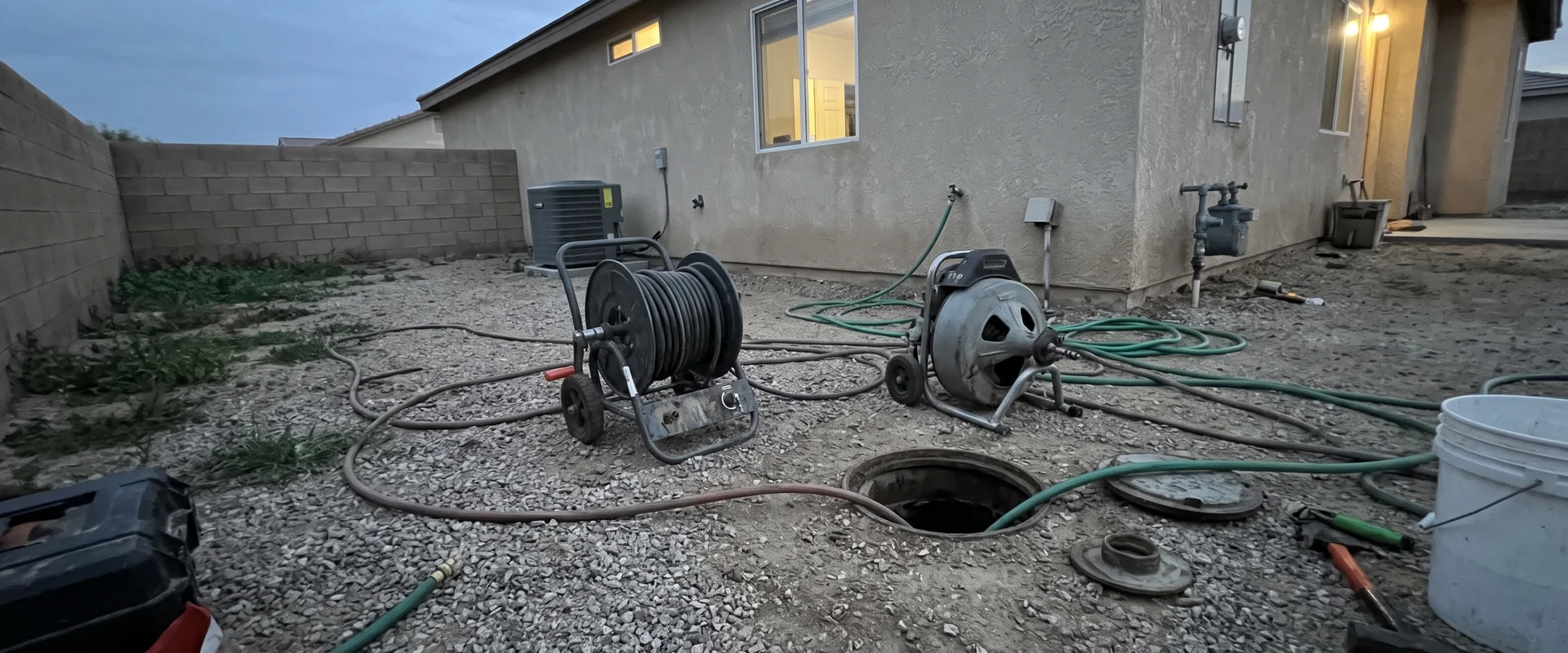
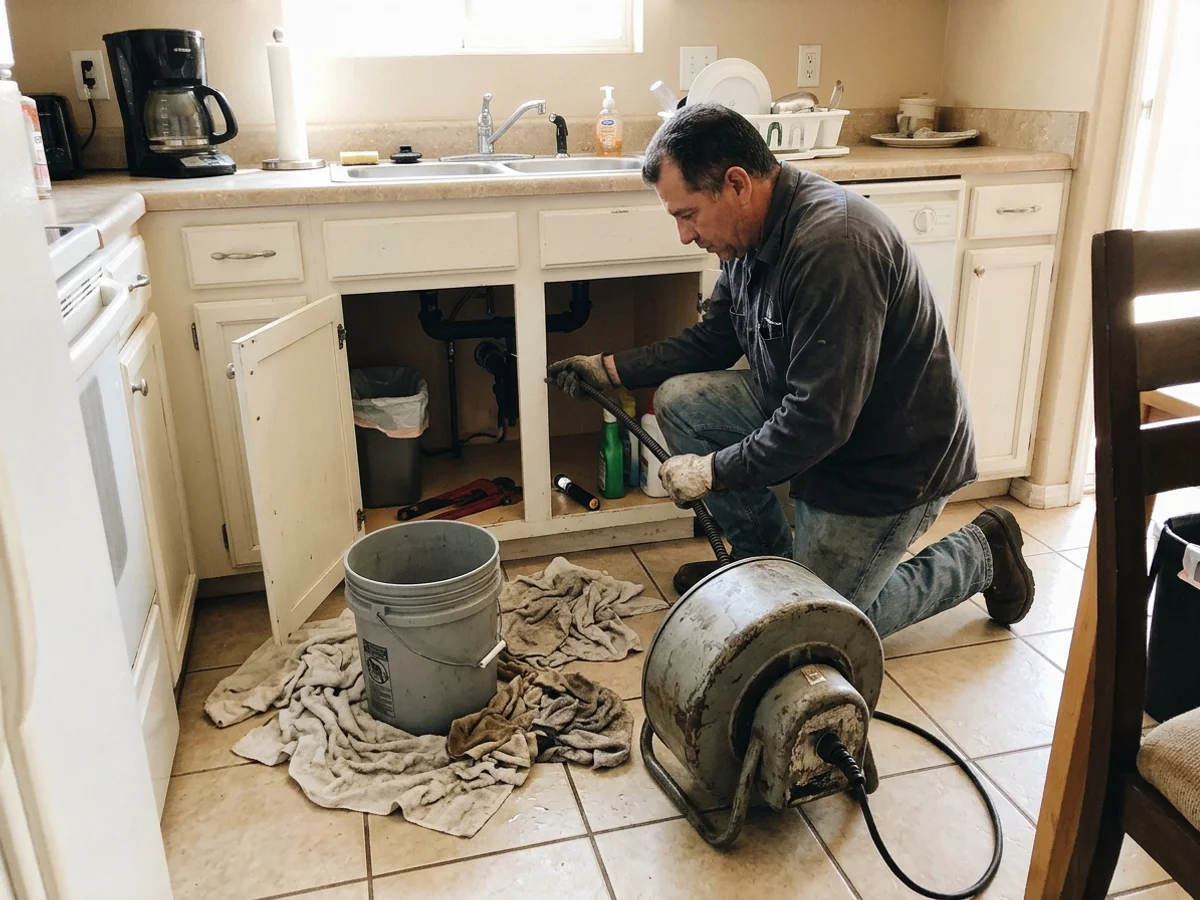
A drain cable spins a steel line with a cutting head through the pipe. It punches through a plug and gets water moving again, which is all a simple clog needs.
A hydro jetter sends high-pressure water through a nozzle that scours the full inside wall of the pipe. That is the better choice when the problem coats the pipe rather than plugging one spot. Grease cools and clings until one meal closes the line. Mineral scale from hard water builds up on the inside of drain lines too, especially those fed by dishwashers and washing machines. Roots work into joints and form dense mats. Laundry lint and detergent build a paste in standpipes. A cable cuts a channel through all of these, while jetting takes the wall back to bare pipe.
When a Drain Keeps Closing Back Up
If clearing only resets the clock, the pipe itself has a defect. The usual suspects are a belly, where a buried section has sagged and holds standing water; an offset, where two sections have shifted at a joint and left a lip that snags waste; a crack or break that catches debris and invites roots; or a collapsed section of old pipe.
A sewer camera settles the question. It goes in through the cleanout and records the line as it travels, and you watch the screen yourself. The camera head carries a small transmitter called a sonde, and a locator above ground picks up its signal so the spot and depth of any defect get marked on the surface. If digging is needed, it happens in one place instead of across the yard. Sometimes the footage shows a healthy line and a one-time clog, which is a good answer to get.
Vacation Homes, Dry Traps, and Settled Sediment
Many houses in and around Lake Havasu City sit empty for weeks or months at a time. In summer heat well past 110 degrees, the water seal in an unused P-trap can evaporate, and sewer gas comes straight into the house. Owners often arrive to a smell and assume the main line has failed, when running water in every drain for a minute solves it.
Lines that sit unused can also let sediment settle and harden. When a full house of guests arrives and every shower and the dishwasher run at once, a marginal line shows itself quickly. A camera inspection during a quiet stretch is easier than a backup on a holiday weekend.
What You Can Do Between Visits
- Keep grease out of the sink. Let it cool, wipe pans, and put it in the trash. Running the disposal only pushes it farther down.
- Skip chemical openers. They rarely clear a true blockage and leave caustic water where the plumber has to work.
- Use strainers in tubs, showers, and the kitchen sink.
- Pay attention to gurgling. It is often the first warning before a main line backup.
- Run water in unused drains when you open up a second home.
If the Pipe Itself Has Failed
When the camera confirms a failed section, there are generally two paths.
| Repair Approach | Suits | What It Means for the Property |
|---|---|---|
| Trenchless lining | Cracked or root-damaged pipe that still holds its shape | Little digging; driveways and desert landscaping stay in place |
| Dig and replace | Collapsed or badly offset sections | Trenching and surface restoration |
A sound line with a temporary clog may just need a thorough jetting. Request a free estimate, ask about any service call fee before booking, and you will get a plain explanation of which option fits. Our drain and sewer guides go into more detail.
Drain clearing and camera inspection are available across Lake Havasu City, Desert Hills, Crystal Beach, the Parker Strip, and Topock. Sewage coming into the house is a 24/7 call.