When a drain stops, getting it moving again is the right first goal. The trouble is that two very different machines can do that, and choosing the wrong one is how a household ends up paying for the same clog three times in a year.
The short answer by situation
Most calls fit one of these rows.
| What is happening | Usually the right first step | Reason |
|---|---|---|
| First clog in years, one fixture | Cable | A single blockage in a healthy pipe |
| Toilet blocked by an object | Toilet auger or cable | Pull it out and you are done |
| Kitchen sink slow again within months | Hydro jetting | Grease lines the whole wall; a cable only pokes a hole |
| Main line backed up twice this year | Camera, then likely jetting | Something in the line is catching waste |
| Older pipe of unknown condition | Cable, then camera, then decide | The pipe may not be safe to jet |
| Roots found on an earlier visit | Jetting with a root-cutting nozzle | Cuts roots back to the wall, not just a tunnel |
| House on septic, several drains slow | Check the tank first | A full tank looks like a clog from inside |
How each machine works
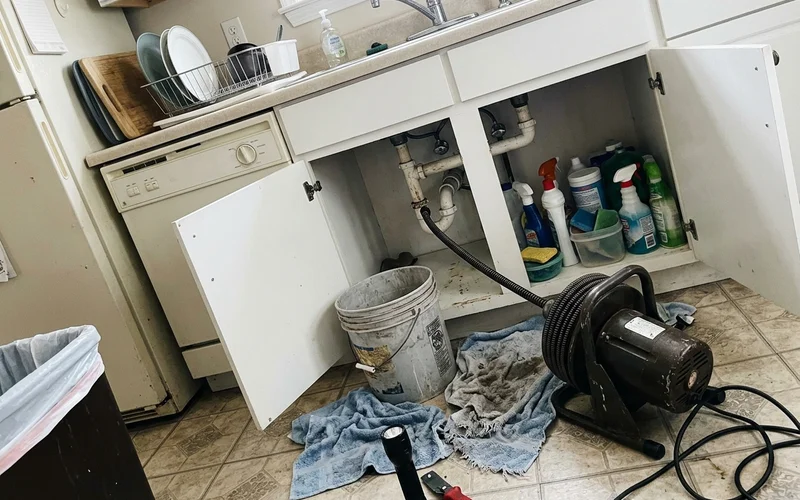
Cabling (snaking). A motor spins a steel cable with a cutting head through the pipe. It bores through whatever is in the way and can hook material and drag it back. The pipe wall, and anything coating it, stays as it was.
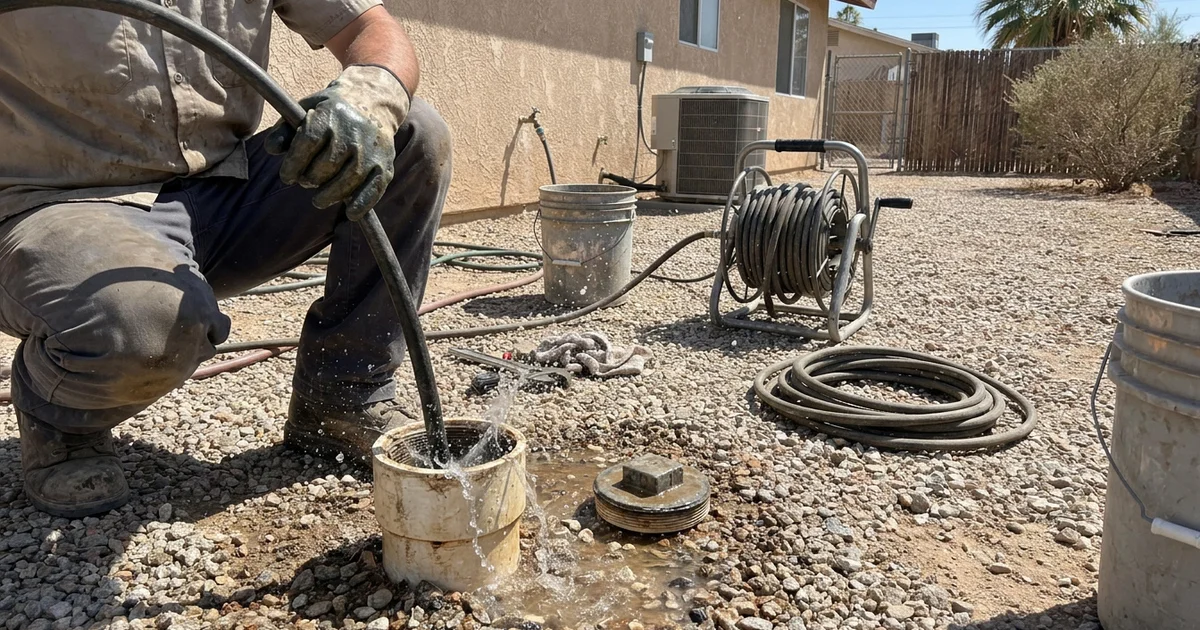
Hydro jetting. A hose carries water at high pressure to a nozzle with jets aimed backward and sideways. The rear jets pull the hose forward while the spray scours the full inside of the pipe. Grease, sludge and soft scale wash downstream.
The cable opens a path. The jetter restores the pipe.
Compared on the criteria that matter
| Criteria | Cabling | Hydro jetting |
|---|---|---|
| Best on | Solid clogs, hair, objects | Grease, scale, sludge, recurring roots |
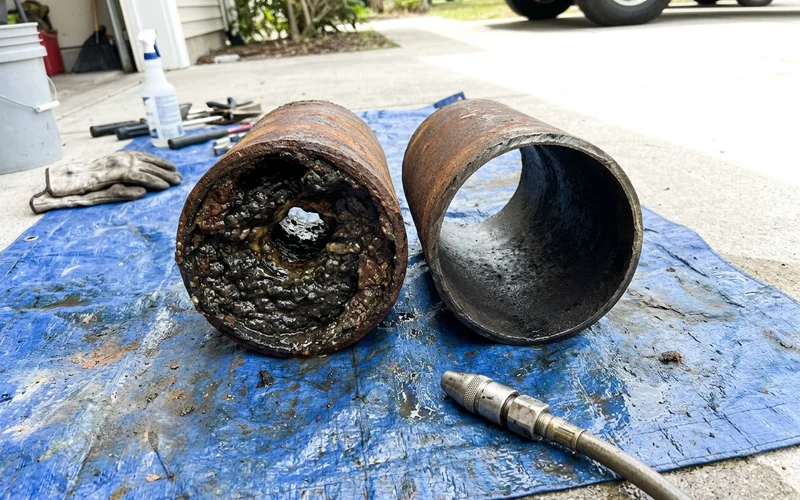
| Leaves wall coating behind? | Yes | No |
| Time to next problem on a fouled line | Often weeks to months | Often much longer |
| Safe on fragile pipe? | Lower risk | Camera first |
| Upfront cost | Lower | Higher |
| Total cost on a repeat line | Grows with each visit | Often lower over time |
| Needs a cleanout? | Can work through a fixture | Works best from a cleanout |
What local conditions change
Hard water in the drains. Lake Havasu City’s water is hard. Most scale ends up in water heaters and faucets, but drains collect it too, especially where hot water from dishwashers and washers cools and drops minerals. A cable will not remove that crust. A jetter can.
Empty-house drains. A Lake Havasu City vacation home that sat closed can come back with a kitchen line that dried and crusted. A grease line that was already narrow often clogs in the first week of cooking for a house full of guests.
Rental wear. Short-term rentals get things flushed that owners would never flush. One object is a cable job. Repeated clogs in the same rental line point to buildup, which is a jetting job.
The repeat-clog rule
If the same line has been cleared twice in twelve months, stop calling it a clog. It is a line problem: grease, a sag, a shifted joint or roots. Another cable job keeps you on a backup schedule. Jetting plus a camera shows whether the pipe is clean afterward or whether a structural defect is waiting. Our guide on why the same drain keeps backing up walks through each cause.
Local expert insight
If the camera shows a collapse, a sag holding water or a joint pulled apart, neither machine is the fix. Clearing buys weeks. Repair is the answer, and it is better to hear that before paying for another clearing.
Four questions before you approve either
- Will you run a camera before or after, and can I watch?
- If you jet, how will you confirm the pipe can take it?
- If this comes back, what do you think the cause is?
- Is the estimate free, and is there a service call fee?
Both methods are part of our drain cleaning service, with camera inspection in the same line of work. Lake Havasu Plumbing Pros answers 928-555-0100 at any hour through an automated bilingual assistant. Tell it which drains are affected, how often it has happened and whether the house is on sewer or septic, and a local plumber gets those details before arriving.