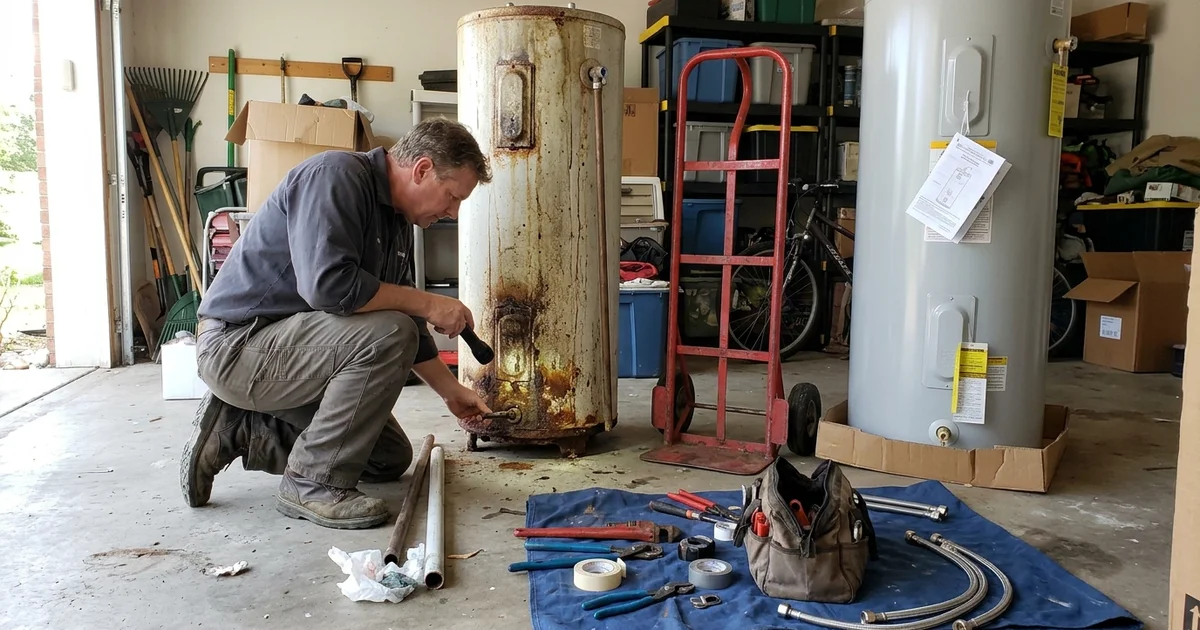
When a water heater starts acting up, the decision usually comes down to one distinction: is the problem the tank, or something attached to it? This guide sorts the common symptoms into repair and replace, then shows how to handle the close calls on hard water in a hot desert garage.
The one rule that settles most cases
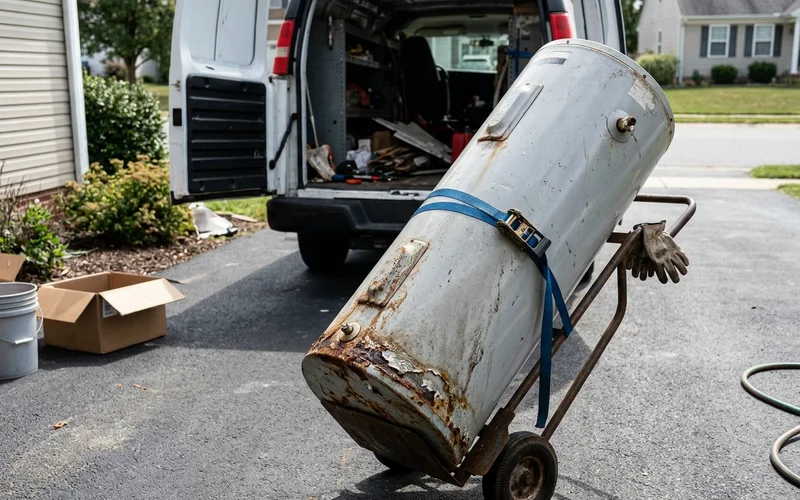
The tank cannot be repaired. Everything bolted to it can. If the steel tank is failing, through a leak or internal rust, replacement is the answer. If a part on the tank has failed and the tank has life left, repair it.
Clear replace signals
| Symptom | Why it points to replacement |
|---|---|
| Water from the tank shell or bottom seam | Corroded-through steel cannot be patched |
| Rusty hot water, clear cold, on an older tank | The anode is spent and the tank is rusting inside |
| Drain valve packed solid with scale on an older tank | The steel has been overheating under a thick layer for years |
| Two or more significant repairs in twelve months | The unit is failing as a whole |
Clear repair signals
| Symptom | Likely part | Fuel type |
|---|---|---|
| No hot water, no leak | Pilot, thermocouple or gas control | Gas |
| No hot water, no leak | Element, thermostat or high-limit switch | Electric |
| Water too hot or not hot enough | Thermostat | Both |
| Runs out fast on a younger tank | Dip tube, or sediment a flush can clear | Both |
| Relief valve dripping | Valve, or high pressure that needs an expansion tank | Both |
| Popping with no other symptom | Sediment; flush and reassess | Both |
A better version of the 50 percent rule
The common rule says that if a repair approaches half the cost of a new installed heater, replace instead. It is a useful start. Two local adjustments make it sharper.
Measure remaining life, not age. A repair on a tank with years ahead is an investment. The same repair on a tank near its end is a down payment on a replacement you will need soon anyway.
Shorten the life estimate for hard water and heat. Lake Havasu City’s water is hard, and many heaters live in garages that run far hotter than 110 degrees in summer. Unless the tank has been flushed and its anode serviced, assume less life left than the label suggests. A tank in a second home that sat full and hot all summer leans further that way.
So the working rule becomes: estimate realistic remaining years, then decide whether the repair cost is worth that many years.
Planned beats emergency
A planned replacement happens on a weekday with the unit you chose and the paperwork sorted. An emergency replacement happens after the tank has emptied onto the garage floor, at whatever hour, with whatever is in stock. When a tank is clearly near its end, choosing your own timing is worth a lot.
What a proper inspection covers
Before anyone recommends either option, expect them to check:
- Age from the data plate
- Sediment, by draining a little water to see what comes out
- Anode condition, where it can be reached
- Corrosion at fittings, the relief valve and the bottom seam
- System pressure, and whether an expansion tank is needed
- Venting and combustion air on gas units
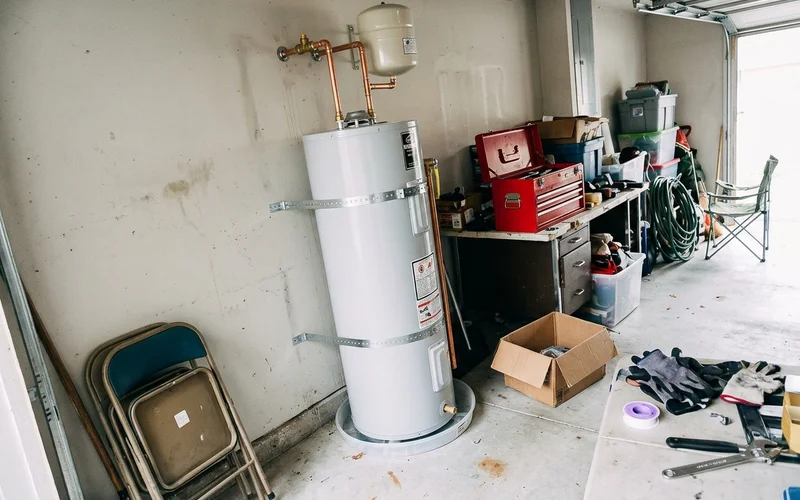
- The original install: connections, drain pan and straps
You should hear both options explained, with reasons. A recommendation with no explanation is not a diagnosis.
If you are replacing
Pick the type. Tank or tankless is a real decision on hard water. Our guide on tank vs tankless lays it out.
Decide on water treatment. If scale killed the old heater, a new one on the same untreated water starts the same countdown. A softener, or at least a strict flush and anode schedule, is what gets the new unit to its rated life.
Ask about the permit. Find out whether the job needs one, who pulls it and whether it is in the estimate.
Think about the house’s use. A Lake Havasu City second home used part of the year may be better served by a simple tank than by a high-output unit nobody will maintain.
Getting a straight answer
Our water heater repair and replacement service handles gas, electric and tankless units. Call Lake Havasu Plumbing Pros at 928-555-0100 at any hour. Tell the automated bilingual assistant the heater’s age, fuel type and what it is doing, and those details are routed to a local plumber before arrival. Request a free estimate and ask about any service call fee before booking.