The best time to find your main water valve is a calm afternoon, not the moment water starts coming through the ceiling. Every minute spent searching the yard during a leak costs flooring and drywall. Set aside fifteen minutes, work through these five tasks, and you will be ready.
Task 1: Locate the house main (5 minutes)
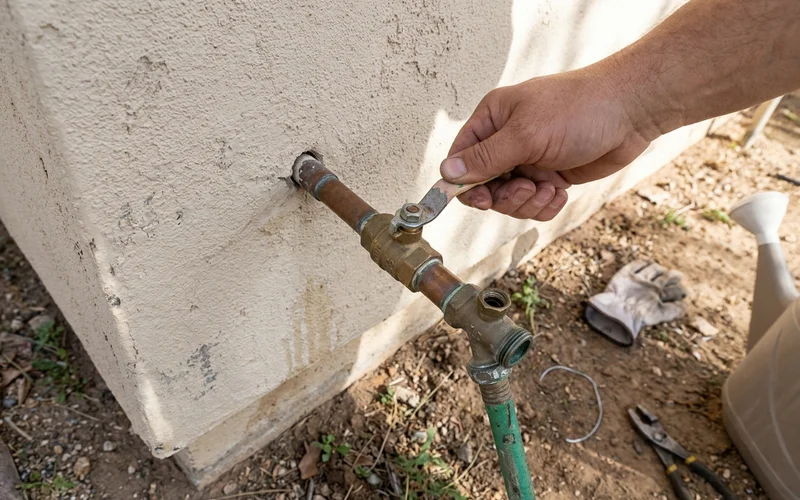
Start on the side of the house facing the street. You are looking for a pipe coming out of the ground or the wall with a valve on it, often near a hose bib. If it is not there, check:
- The garage wall, especially close to the water heater
- Next to a water softener or filter where the supply enters
- A utility closet or laundry area
- Under a manufactured home, near where the line rises from the ground
Once you find it, mark it. A bright tag or zip tie on the handle helps anyone in the house find it in a hurry.
Task 2: Know which kind of valve you have (1 minute)
| You see | Valve type | How to close it | Risk |
|---|---|---|---|
| A straight lever | Ball valve | Quarter turn, lever across the pipe | Low |
| A round wheel | Gate valve | Clockwise, several full turns | Can seize and snap |
Lake Havasu City’s water is hard, and minerals build up around valve stems that never move. A gate valve that has not been turned in years can be cemented in place. If the wheel does not move with firm hand pressure, stop. Forcing it can shear the stem or crack the valve body, and then the valve itself is leaking. Go to Task 3.
Task 3: Find the backup at the meter (5 minutes)
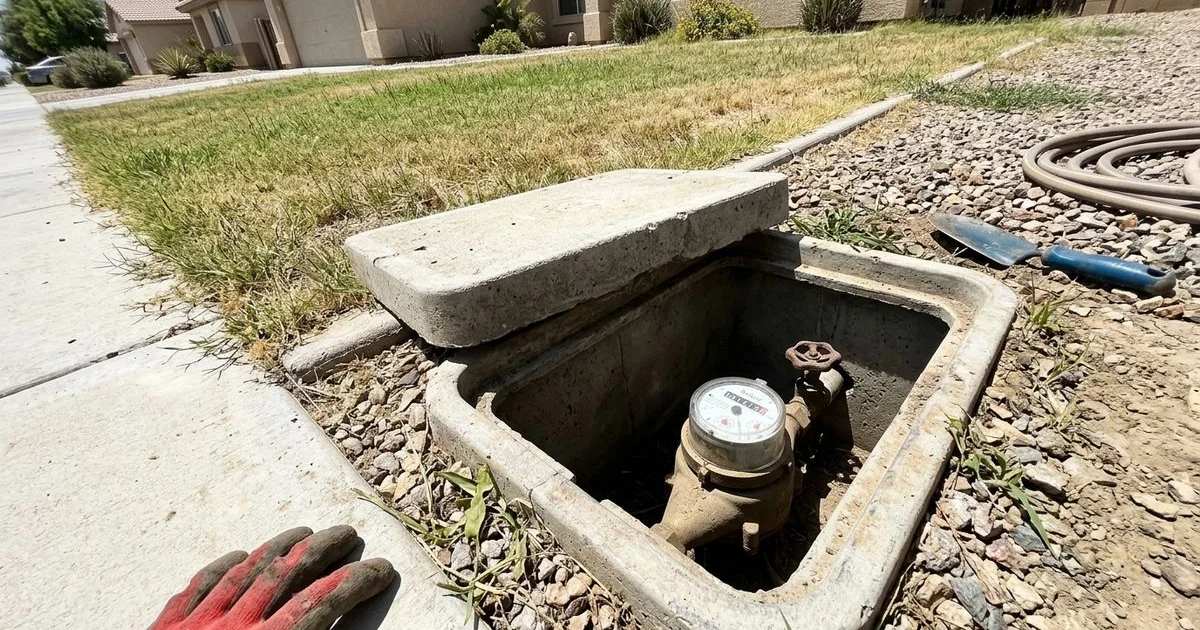
The meter sits in a box near the curb or property line. Lift the lid carefully with a long screwdriver and check for scorpions and spiders, which like the shade in these boxes.
- On the house side of the meter is a valve you can close.
- A lever style turns a quarter turn by hand.
- A tab style needs a meter key, a long T-shaped tool from any hardware store. Keep one in the garage.
- Leave everything on the street side alone. That belongs to the water provider.
Task 4: Learn the fixture stops (a few minutes per room)
For a leak at one fixture, you can leave the rest of the house running.
| Fixture | Where its shutoff is |
|---|---|
| Sink | Two small valves on the wall inside the cabinet |
| Toilet | One valve on the wall behind or beside the tank |
| Water heater | Cold valve on the pipe at the top of the tank |
| Washing machine | Two valves in the wall box behind the washer |
| Softener | Bypass valve on the softener head |
| Refrigerator ice maker | Small valve behind the fridge or under the sink |
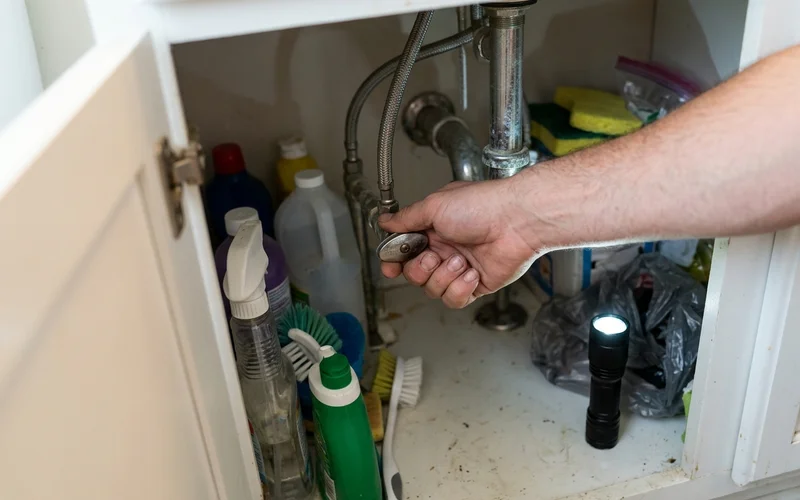
Turn them gently. Old multi-turn stops seize just like gate valves. If one weeps at the stem or will not close fully, use the main and get the stop replaced.
Task 5: Practice once a year (2 minutes)
Close the main and reopen it once a year. Pick a date you will remember. Valves that move regularly rarely seize, and you will find out about a stiff one on your schedule rather than during a flood.
After the water is off in an emergency
- Open the lowest faucet, such as an outdoor hose bib, to drain remaining pressure.
- If the water heater is involved, close its cold valve and turn off the gas or breaker.
- Call, and say the water is off. That changes how urgent the job is and what the plumber brings.
The full sequence is in what to do when a pipe bursts.
Local expert insight
Lake Havasu City’s many second homes and rentals are where a known valve location pays off most. Leave a photo of the valve in the house manual and send it to your property manager. In a closed house, that one photo can save weeks of damage.
If water is spreading and you cannot find either valve, call our emergency plumbing line at 928-555-0100. Lake Havasu Plumbing Pros answers 24 hours a day through an automated bilingual assistant that takes the details and routes them to a local plumber.