A broken supply line can put a lot of water on the floor every minute. Whether you end up with a mop-and-fan afternoon or a tear-out of flooring and drywall comes down to what happens in the next few minutes. Here is the order that limits the damage most.
Before you move: one rule
Water first, everything else second. Do not stop to move the couch or grab towels. Every minute the water runs adds to the damage. Go to the valve.
Minute 0 to 1: Stop the water
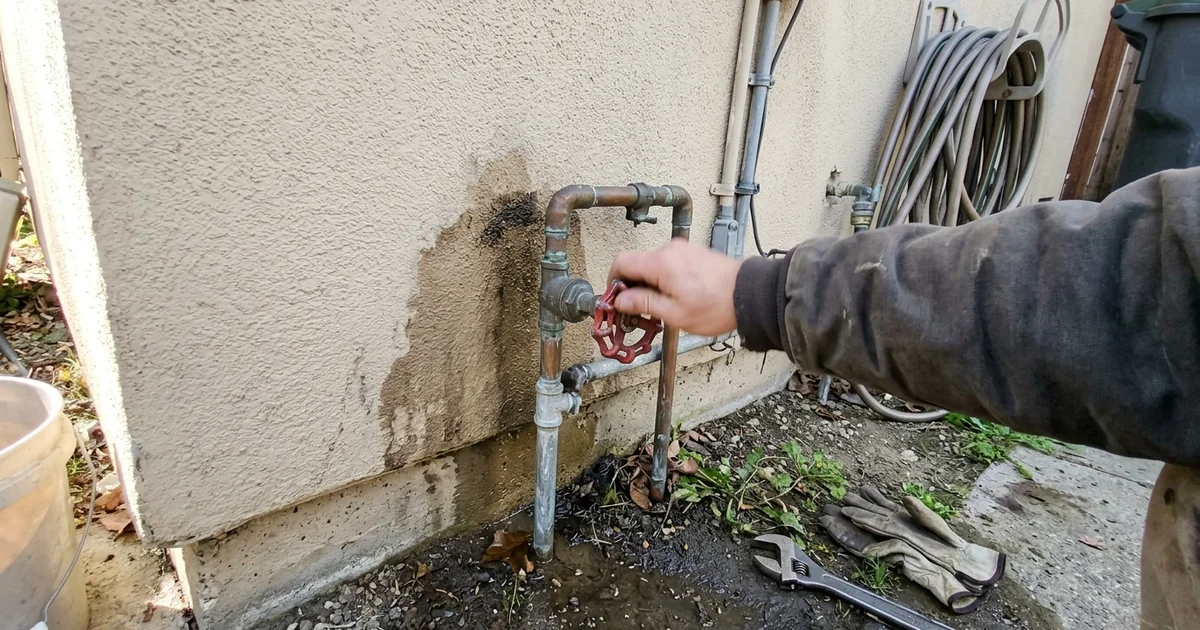
The main valve is usually where the supply line enters the house. In most Lake Havasu City homes, check these spots in order:
- The street-facing wall, near a hose bib
- The garage, often near the water heater
- Beside a water softener or filter, if one is installed where water comes in
- Under a manufactured home, near where the line rises from the ground
| If the handle is | Do this | Be careful |
|---|---|---|
| A straight lever | Quarter turn until it sits across the pipe | Usually closes easily |
| A round wheel | Turn clockwise several full turns | Hard-water scale can seize old wheels |
If a wheel will not move with firm hand pressure, stop. Forcing a seized valve can snap the stem and add a second leak. Go to the meter box at the curb instead and close the valve on the house side of the meter.
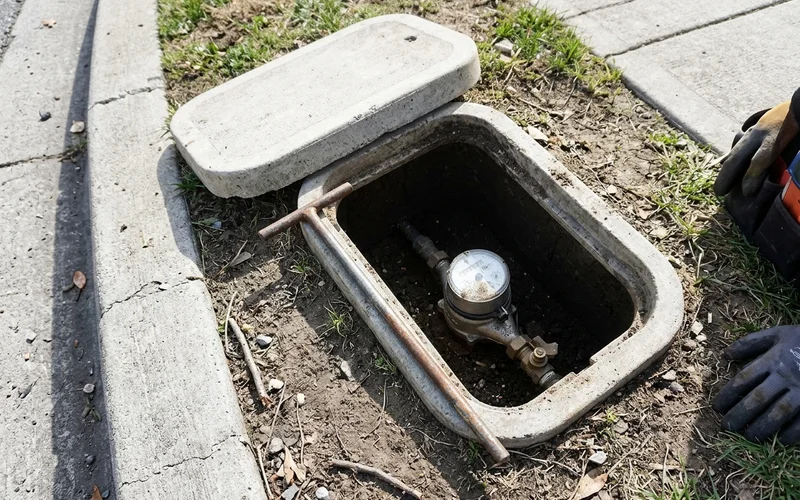
Cannot find either valve? Call emergency plumbing at 928-555-0100 and describe what you see while you keep looking. Later, on a calm day, read how to shut off your water so you know the spot for next time.
Minute 1 to 2: Make the room safe
Water heading toward outlets, power strips, the washer or the water heater is an electrical hazard. Switch off those circuits at the panel, but only from a dry spot.
Stay out of standing water near power
If reaching the panel means walking through water, do not do it. Get people and pets out of the room and call. Nothing on the floor is worth the risk.
Minute 2 to 3: Empty the pipes
The main is closed, but the lines are still full and under pressure. Open the lowest faucet first, such as an outdoor hose bib, a laundry sink or a tub. Then open one or two faucets elsewhere to let air in so the lines drain quickly.
If the water heater is the source, close the cold valve on top of the tank and turn the gas control to off, or switch off its breaker. If it is not the source, leave it alone for now.
Minute 3 to 5: Contain and document
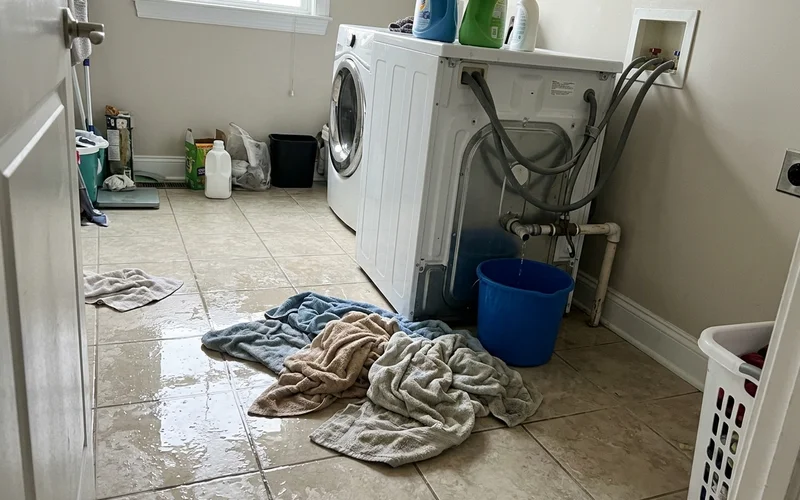
- Set buckets under drips and lay towels along the edge of the water.
- Lift rugs, boxes and electronics off the floor.
- Photograph and video everything before you clean: the broken pipe, the water, anything damaged. Your insurance company will ask for it.
- Open windows and run fans. Dry desert air pulls moisture out quickly in the first hours.
- Leave wet drywall in place. The plumber needs to see where the pipe runs before anything is cut.
Minute 5: Make the call
An automated bilingual assistant answers in English or Spanish, at any hour, and asks four questions:
| It will ask | Example answer |
|---|---|
| Where is the water coming from? | “Through the ceiling above the hallway” |
| How long has it been running? | “About ten minutes” |
| Is the water off now? | “Yes, I closed the main” |
| One fixture or the whole house? | “Whole house” |
Add anything else you know: the pipe material, whether the house is on a slab, and whether you have had other small leaks recently. Several leaks within a year or two usually mean the whole pipe system is aging, which changes what the plumber will suggest. Those details are routed to a local plumber, so you do not have to explain it all twice.
When the house is a second home or rental
Many Lake Havasu City homes sit empty for weeks, and rentals change guests often. Keep the valve location written inside a cabinet door, and make sure any property manager or cleaner knows it. If someone reports water while you are away, the assistant can take their name and number for access.
Lake Havasu Plumbing Pros takes these calls day and night. Request a free estimate when you call, and ask about any service call fee or after-hours rate before booking.