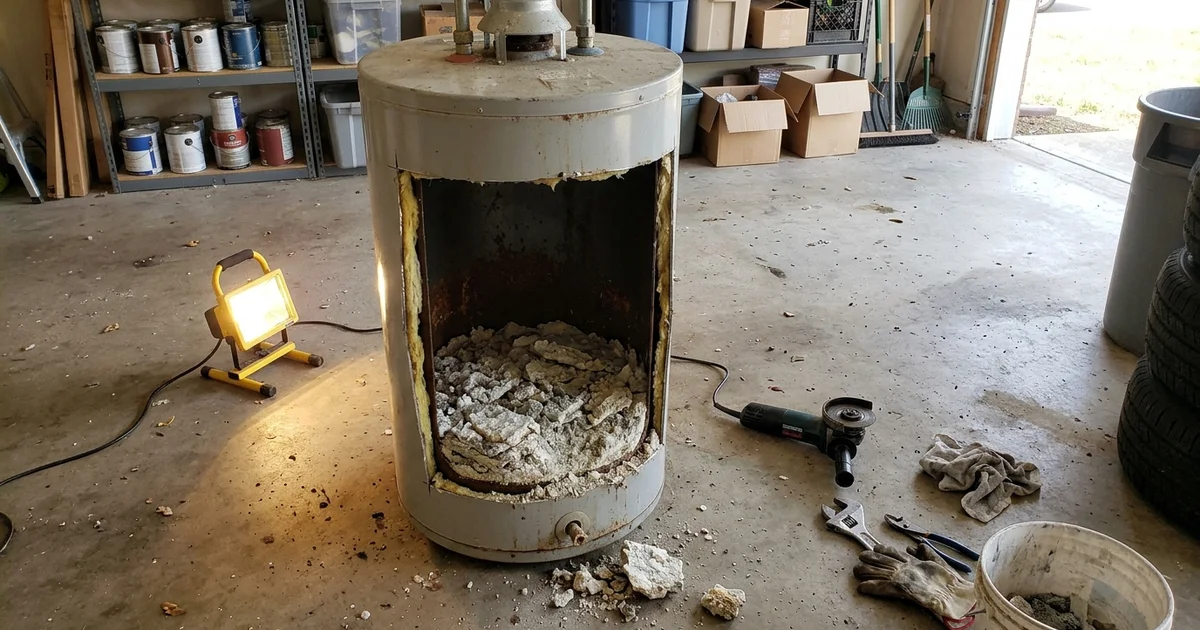
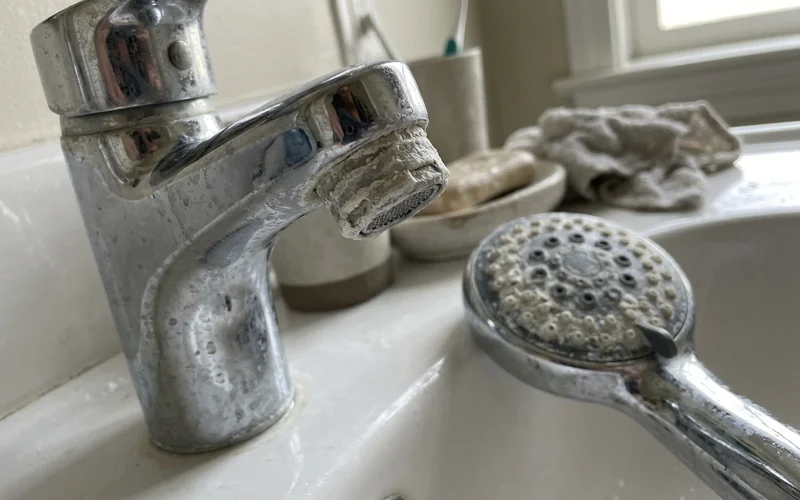
Live in Lake Havasu City for a year and you will see it: white crust on the shower head, cloudy spots on glasses, a faucet handle that starts to grind. Those are the visible signs. The expensive part happens where you cannot see it, mostly at the bottom of your water heater.
This guide explains where the water comes from, what hardness actually is, where it ends up in a house and what you can do about it.
Where the water comes from
Lake Havasu City’s raw water does not come straight out of the lake. It is groundwater pumped from wells in the Colorado River aquifer, which is connected to the river. The river carries a heavy load of dissolved minerals, and the water that reaches your tap does too.
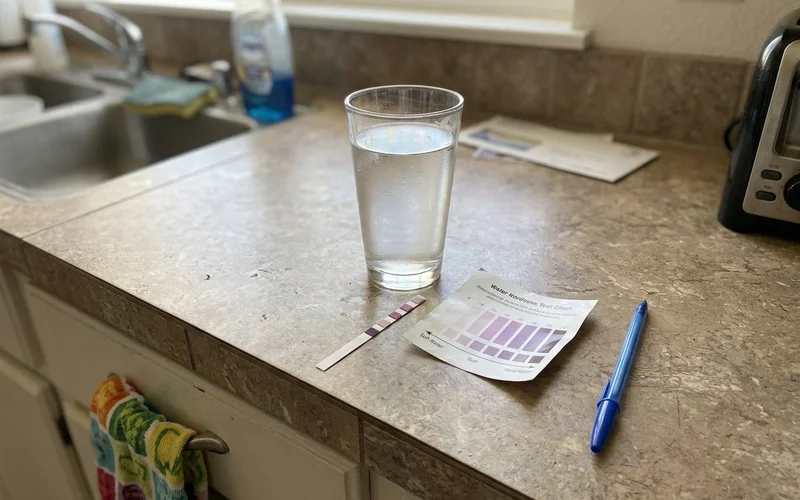
The short version: the water is hard. For a specific reading at your house, use a test strip at the kitchen tap, ask for a test during a service visit, or look up the city’s current water quality report. That reading is the one to use when you set up any treatment equipment.
What hardness actually is
Hardness is dissolved calcium and magnesium. While water is cool and moving, those minerals stay dissolved. Two things force them out:
- Heat. Warm the water and the minerals come out as solid scale.
- Evaporation. Let water dry on a surface and the minerals stay behind as crust.
So the damage shows up in two places: anything that heats water, and anything that gets wet and dries.
The six places it hits, most costly first
| Rank | Where | What happens | Early sign |
|---|---|---|---|
| 1 | Tank water heaters | Scale settles on the tank bottom, the burner runs longer, the steel overheats and corrodes | Popping or rumbling while heating |
| 2 | Tankless heaters | Scale narrows the heat exchanger passages | Temperature swings, error codes |
| 3 | Shutoff valves | Scale cements the stem of valves nobody turns | Valve will not close during a leak |
| 4 | Faucet cartridges and toilet parts | Scale grinds sealing surfaces | Drips, stiff handles, toilets that run |
| 5 | Dishwashers and washers | Heating elements scale like a small water heater | Longer cycles, film on dishes |
| 6 | Shower heads and aerators | Openings clog with crust | Weak or sideways spray |
The bottom of the list is the most visible and the cheapest to fix. The top of the list is where most of the money goes. If you are seeing row 6, assume row 1 is happening too. Our water heater repair page covers flushing, anode checks and replacement.
Why the desert summer makes it worse
Summers here regularly run past 110 degrees. The supply line stays warm for months, and warm water is already closer to the point where minerals drop out. Heaters sitting in hot garages cycle hard with no cool season to rest. The result is faster scale on every hot surface in the house.
Empty homes add another twist. A second home or rental that sits closed with a full water heater leaves warm, mineral-heavy water standing in the tank for weeks.
Your options, from least to most protection
| Step | What it does | What it does not do |
|---|---|---|
| Clean aerators and shower heads | Restores flow at that fixture | Nothing for heaters or valves |
| Flush the water heater every year | Removes loose sediment before it hardens | Does not stop new scale |
| Check the anode rod every two to three years | Protects the tank steel | Does not address scale |
| Descale a tankless unit on a schedule | Keeps the heat exchanger clear | Has to be repeated |
| Salt-free conditioner | Reduces how much scale sticks | Does not remove hardness |
| Whole-home softener | Removes hardness before it reaches anything | Does not purify drinking water |
| Reverse osmosis at one tap | Better drinking and cooking water | Does not protect the rest of the house |
With water this hard, a properly sized softener works more like preventive maintenance than a luxury. Sizing depends on your tested hardness and how much water your household uses, which is explained on our water softeners and reverse osmosis page.
Local expert insight
The first sign most owners notice is the shower head. The first sign that costs real money is usually a water heater that starts popping in its third or fourth year. Treat the shower crust as an early warning.
The bottom line
You cannot change what comes out of the aquifer, but you can control how much damage it does. If you see crust on fixtures or hear your heater pop, call Lake Havasu Plumbing Pros at 928-555-0100. An automated bilingual assistant answers at any hour and routes your details to a local plumber. Request a free estimate and ask about any service call fee before booking.