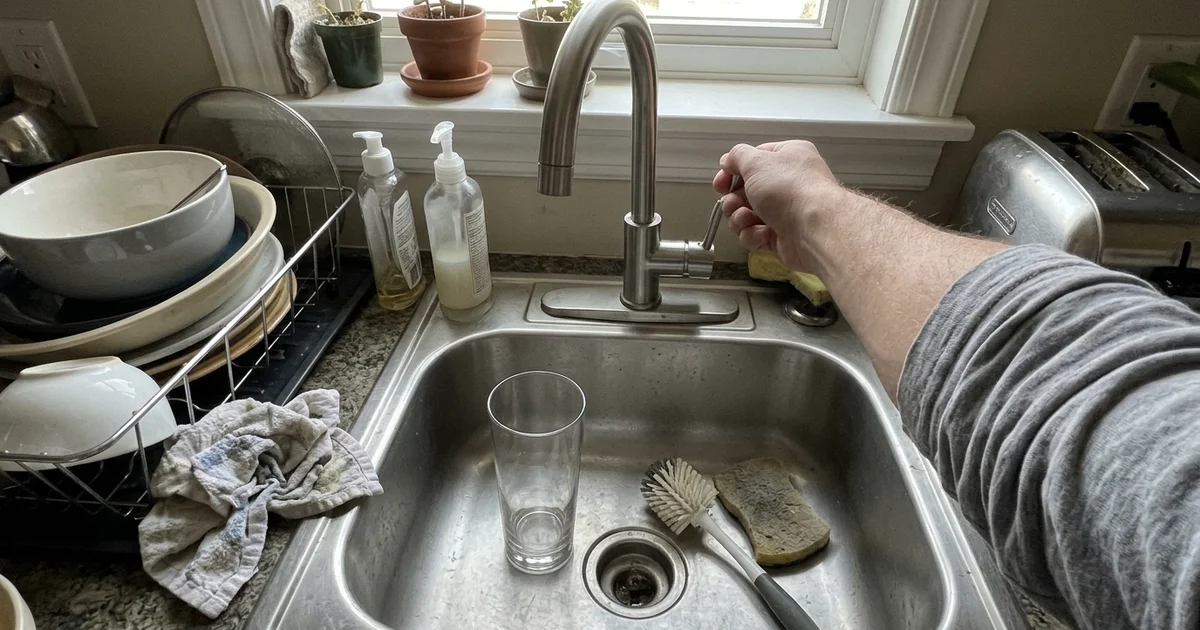
You turn the tap and nothing comes out. The first fear is usually a burst pipe inside a wall, but that is rarely the cause. A broken pipe gives you water where you do not want it. No water at all usually means something upstream is blocking the flow, and most of those causes can be sorted out in minutes.
What to expect, at a glance
| You will spend | Doing | To rule out |
|---|---|---|
| 1 minute | Trying taps in other rooms | A single fixture problem |
| 1 minute | Asking a neighbor | A street-wide outage |
| 2 minutes | Checking both valves | A closed or failed valve |
| 1 minute | Watching the meter | A broken service line |
Step 1: One fixture, or the whole house?
Try taps in two or three rooms, hot and cold. If only one fixture is dry, the problem is its supply line, its shutoff or a clogged aerator. That is not an emergency.
Step 2: Do the neighbors have water?
Ask next door or look for outage notices from your water provider. If the whole street is dry, it is a utility issue such as a main break or scheduled work, and nothing on your side will fix it.
Step 3: Are both valves open?
Check the house main and the valve on the house side of the meter at the curb. Landscapers, irrigation work, a property manager or your own shutdown from last season can all leave a valve closed. A half-open valve gives you a trickle, not nothing.
Step 4: Is the meter moving?
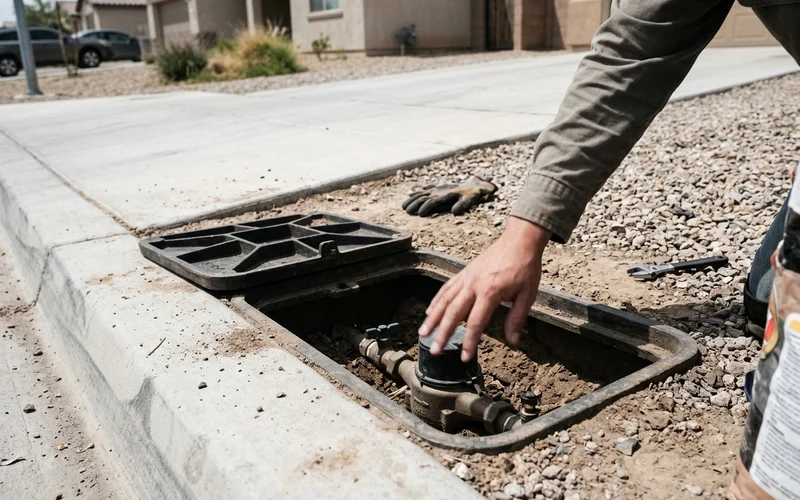
With every tap closed, watch the low-flow indicator in the meter box. If it spins with nothing running, water is escaping between the meter and the house, most likely through a broken service line. Look for a wet patch in the yard.
What your findings probably mean
| What you found | Most likely cause | What happens next |
|---|---|---|
| Whole street dry | Utility outage or main break | Wait for the provider |
| A valve was closed | Someone closed it | Open slowly and check for leaks |
| Valve handle spins freely, no flow | Gate has broken off the stem inside | Valve replacement |
| Pressure faded over days to nothing | Worn pressure regulator | Regulator replacement |
| Meter spinning, wet patch outside | Broken service line | Leak location and line repair |
| Pressure falling slowly for years | Old pipe narrowing inside | Repipe evaluation |
| Softener at the entry | Stuck softener valve or failed unit | Put it in bypass and test |
Pressure regulators and hard water
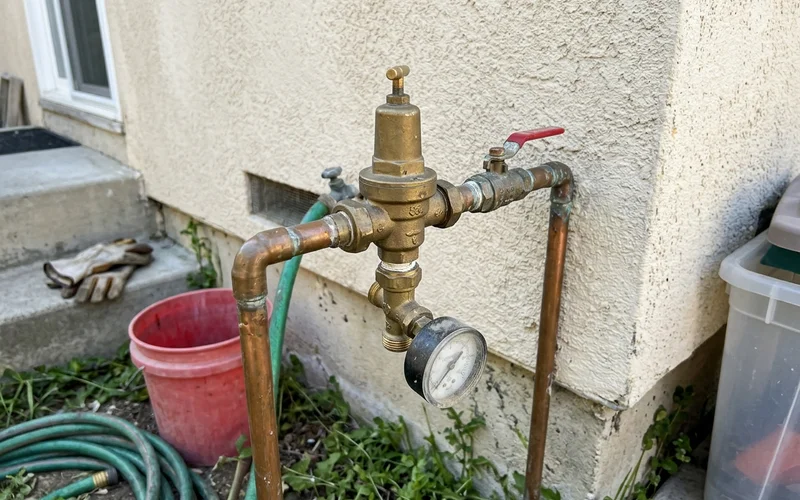
Many Lake Havasu City homes have a brass pressure regulator where the main line enters. Its internal diaphragm and seat sit in hard water around the clock, and mineral buildup wears them out. When one fails, pressure often fades over a few days before dropping to almost nothing.
Old pipe
Pipe that narrows from the inside, such as galvanized steel, usually shows up as pressure dropping slowly over years rather than a sudden stop. Polybutylene tends to fail suddenly at fittings instead, which gives you a leak, not a dry tap. See galvanized vs PEX repiping.
The arrival scenario
This comes up often in Lake Havasu City second homes and rentals. You open the house after weeks away and there is no water. Before anything else:
- Confirm the main and the meter valve are both open.
- Switch the softener to bypass. If water returns, the softener is the problem.
- Leave the water heater off until water is flowing and the tank has refilled.
Once water is back, run a quick meter test anyway. Weeks of heat and no use are when slow leaks start.
Local expert insight
Whether the loss was sudden or gradual is the single most useful detail you can give. Sudden points to a valve, a regulator or a break. Gradual over months or years points to the pipe itself.
What to tell the assistant
When you call Lake Havasu Plumbing Pros, an automated bilingual assistant answers in English or Spanish and takes down:
- Whole house or one fixture
- Whether neighbors have water
- Sudden or gradual, and over how long
- Whether both valves are open and the handles turned normally
- The rough age of the home and pipe material, if known
- Whether there is a softener or filter where the water enters
Those answers are routed to a local plumber, who can arrive with a regulator, a valve or leak-locating equipment instead of starting from scratch. For a house with no water at all, our emergency plumbing line is answered 24/7 at 928-555-0100. Ask about any service call fee when you book.