A running toilet is easy to live with. It is a faint hiss, or a short refill every half hour, and everything still works. But it runs day and night, and the water bill shows it. In a Lake Havasu City second home that sits closed for weeks, one running toilet can explain a bill that otherwise makes no sense.
The cause is almost always one of four parts, and you can usually tell which in a few minutes.
Confirm it, even if you cannot hear it
The dye test
Put a few drops of food coloring in the tank. Do not flush. Come back in fifteen to twenty minutes. Color in the bowl means water is slipping past the flapper or the flush valve seat, even if you never hear it run.
Match what you see to the cause
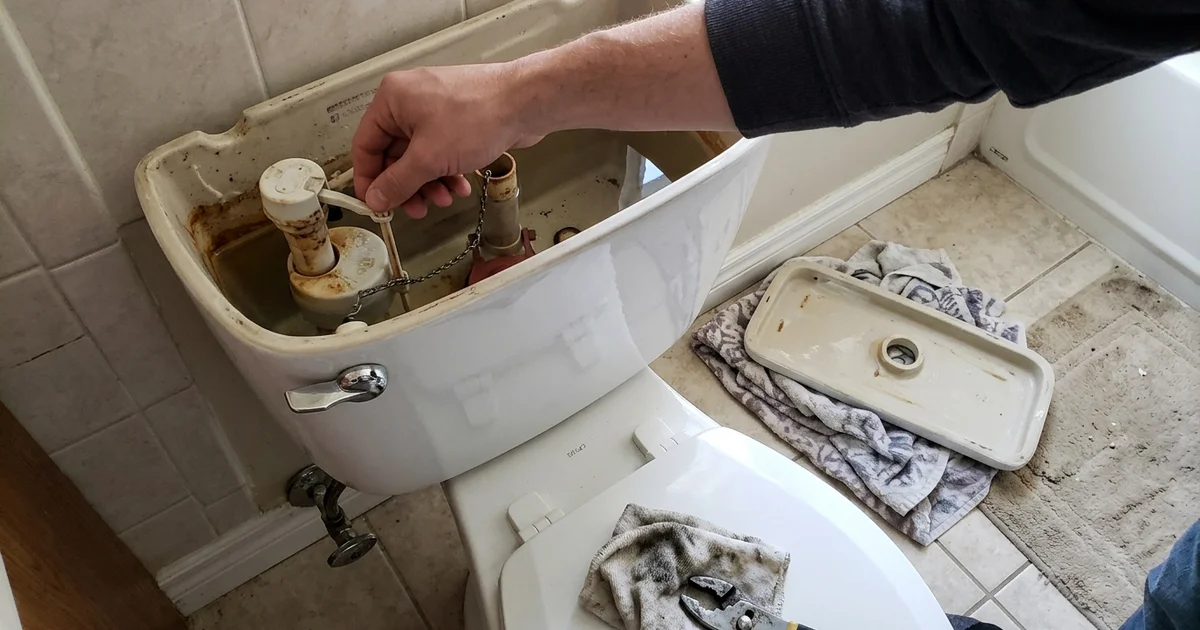
Take the tank lid off, flush once and watch the whole cycle.
| What you see | Likely cause | Urgency | Who fixes it |
|---|---|---|---|
| Water trickling into the bowl, tank refills by itself | Flapper not sealing | Fix this week | Usually DIY |
| Flapper does not drop fully, chain catches | Chain too tight, loose or tangled | Fix today | DIY |
| Water spilling into the overflow tube | Fill valve not closing, or float set too high | Fix this week | DIY or plumber |
| New flapper, still leaking | Flush valve seat scaled or pitted | Book a repair | Usually a plumber |
| Water on the floor at the base | Wax ring or tank-to-bowl seal | Book soon | Plumber |
| Toilet rocks when you sit | Broken wax ring, possible subfloor damage | Book soon | Plumber |
Why the usual fix often fails here
Everything inside a toilet tank sits in water all day, and the water here is hard:
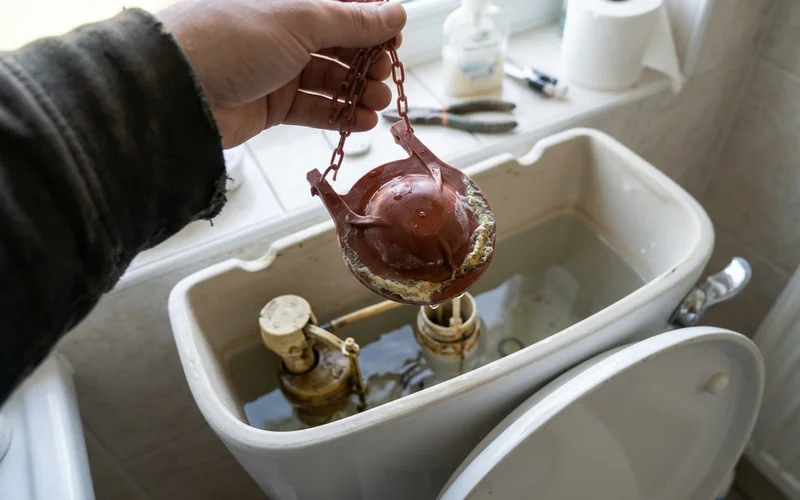
- The flapper stiffens and picks up a fine crust on its sealing edge.
- The flush valve seat, the ring the flapper rests on, scales over and turns rough.
- The fill valve collects deposits on its internal seal and stops closing cleanly.
That is why “I put in a new flapper and it still runs” is such a common complaint. The new rubber is fine. The seat under it is not. It is the same process that wears out faucet cartridges, covered in hard water and fixture wear.
What a handy owner can do
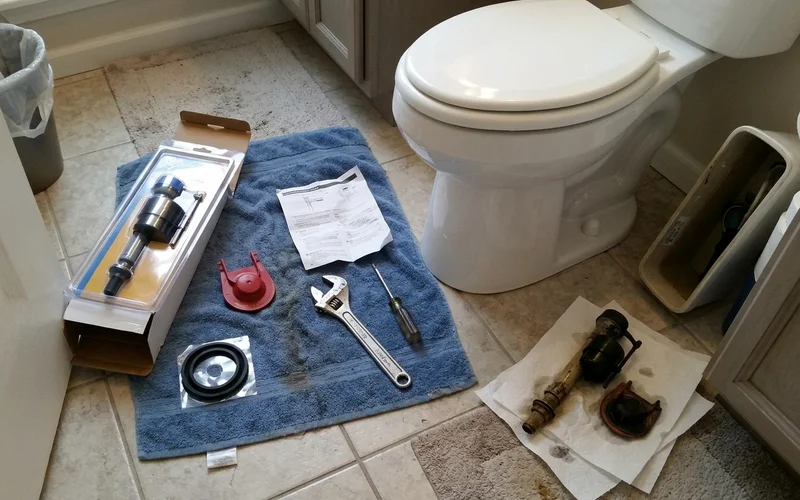
- Close the valve behind the toilet, then flush to empty the tank.
- Adjust the chain so it has a little slack, about one or two links, with the flapper closed.
- Replace the flapper. Bring the old one to the store, since 2-inch and 3-inch flappers are not interchangeable.
- Scrub the flush valve seat gently with a non-scratch pad to remove crust.
- Set the float so water stops about an inch below the top of the overflow tube.
- If the fill valve is the problem, a universal replacement is a manageable swap.
Rental and second-home owners
Lake Havasu City has plenty of rentals, and guests rarely report a toilet that runs quietly, and nobody hears it in an empty house. Two habits help:
- Ask your cleaner to lift the tank lid and check the water level at every turnover.
- Close the valve behind each toilet, as well as the main, when the home will be empty.
Time to call instead
- The valve behind the toilet will not close, or it leaks at the stem.
- The supply connections are corroded and you are worried about breaking them.
- The flush valve seat is pitted and has to be replaced.
- There is water at the base, or the toilet rocks.
- You have fixed the same toilet two or three times in a year or two.
A rocking toilet matters more than it seems, because a broken wax seal can let water and sewer gas into the subfloor. When a tank has needed repeated repairs, a full rebuild of flapper, fill valve, flush valve and gaskets, plus a new supply valve, usually makes more sense than another single part.
Our fixture repair service covers toilet rebuilds, wax rings and supply valves. Call Lake Havasu Plumbing Pros at 928-555-0100 at any hour; an automated bilingual assistant answers and routes the details to a local plumber. Request a free estimate and ask about any service call fee before booking.